Aura cleansing is the practice of deliberately clearing your own energetic field after contact with stress, conflict, crowds or difficult environments. The aura cleansing benefits most often described by practitioners are a sense of lightness, clearer thinking, easier sleep and a feeling of being more yourself again.
The practices themselves are simple and mostly free: meditation, breathwork, a salt bath, sound, smoke, visualization, grounding and energy work.
This guide explains what an aura is understood to be within spiritual traditions, why people practise cleansing, the signs commonly associated with needing it, and eight practices you can use at home tonight.
One framing to hold throughout. The aura belongs to spiritual tradition rather than to physiology. No aura has been measured, and no cleansing practice has been shown to produce a physical effect. What these practices do reliably offer is a deliberate pause, a transition ritual between one part of your day and the next, and that is genuinely useful without needing any further claim.
What Is an Aura in Spiritual Traditions?
Across many traditions, the aura is described as a field of subtle energy surrounding the body, extending outward by anything from a few inches to several feet depending on the source consulted.
Descriptions commonly include layers, often numbered between three and seven and associated with physical, emotional, mental and spiritual aspects of a person; colours said to shift with mood and circumstance; a relationship with the chakras, each centre said to feed a corresponding layer; and permeability, the idea that the field takes on impressions from people and places.
These descriptions vary considerably between traditions and should be read as a spiritual vocabulary rather than an agreed model. Practitioners who claim to read auras are describing their own perception, which is not verifiable and should not be treated as diagnosis.
What Is Aura Cleansing?
Aura cleansing is any deliberate practice intended to clear what the field is believed to have picked up.
Practitioners describe it as a reset. You come home from a difficult day, a crowded commute, a hospital visit or an argument, and rather than carrying the residue into the evening, you do something specific to mark the transition.
Traditionally it is distinguished from related practices this way: aura cleansing clears the personal field after the fact, grounding settles you into the body, shielding maintains a boundary before entering a difficult environment, and space cleansing addresses a room rather than a person.
Most practitioners use them together, in that order.
Why People Practise Aura Cleansing
The stated reasons fall into three broad groups.
As a transition ritual. The most common and most defensible. A deliberate act separating work from home, or a difficult encounter from the rest of the evening. This works whatever you believe about subtle energy.
As part of a spiritual discipline. Within traditions that treat the field as real, regular cleansing is simply maintenance.
After specific contact. Many practitioners cleanse after hospitals, funerals, conflict or crowded travel, and those who work with people professionally often cleanse between clients as routine.
Commonly Described Aura Cleansing Benefits
These are benefits practitioners describe and people report. They are traditional associations and personal experiences rather than demonstrated effects.
- a sense of lightness, often described as putting something down
- clearer thinking after a mentally cluttered day
- easier transition into sleep
- reduced carry-over of other people’s moods
- a stronger sense of your own boundaries
- a marked separation between one part of the day and the next
Most of these describe subjective state rather than outcome. That is the honest scope of the practice, and within it people find it worthwhile.
Signs People Associate With Needing Energetic Cleansing
Within spiritual practice, the following are traditionally associated with a field that is said to need clearing. They are not symptoms, they do not indicate any condition, and they should not be read as diagnosis of any kind.
- feeling drained after time with particular people
- carrying someone else’s mood home without knowing why
- a heavy feeling after crowded places
- difficulty settling in the evening despite being tired
- feeling not quite yourself after a difficult period
- reluctance to enter a particular room
Two cautions. First, all of these have ordinary explanations, most often tiredness, overwork, poor sleep or unresolved tension with someone. Address those first, because they are the ones you can actually change.
Second, if any of it is persistent and distressing, particularly ongoing low mood, exhaustion that does not lift with rest, or anxiety that interferes with daily life, please speak to a doctor. These are health matters. Treating them as energetic problems delays care that people need.
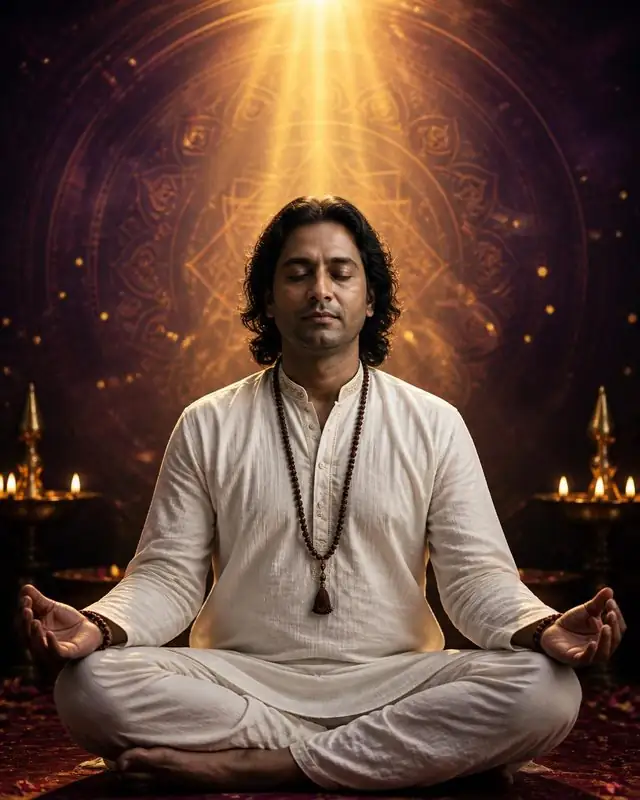
Practice 1: Meditation
The most straightforward cleansing practice is simply sitting still with attention.
Ten minutes: sit comfortably with eyes closed, breathe naturally for two minutes, move attention slowly from the feet upward to the head without adjusting anything, rest a few minutes in open attention, then finish by feeling your contact with the floor.
Practitioners describe this as letting the field settle rather than actively clearing it. Whatever the framing, ten minutes of stillness after a demanding day changes how the evening goes.
Practice 2: Breathwork
Breath is the traditional bridge between body and attention, and it is the quickest of these practices.
A simple version, three minutes: breathe in through the nose for a count of four, out through the mouth for a count of six. On each exhale, let the shoulders drop a little further.
Practitioners often pair this with an intention, imagining each exhale releasing what was picked up during the day.
Keep it gentle. Forceful breathing techniques, rapid breathing and extended breath retention should be learned with a qualified teacher, and are not suitable during pregnancy or for anyone with heart conditions, high blood pressure, epilepsy or certain respiratory conditions.
Practice 3: Salt Bath Practices
Salt appears in cleansing traditions almost universally, and a salt bath is among the most popular aura cleansing techniques.
A typical practice: add a handful or two of rock salt or Epsom salt to warm bathwater, soak for fifteen to twenty minutes, and finish with a brief rinse under clean water. Many people set an intention at the start and picture the water carrying the day away.
If you do not have a bath, a salt scrub in the shower or a foot soak in a bucket is used in the same way.
Practical safety points that matter:
- avoid salt baths with open wounds, broken skin or active skin conditions
- keep the water warm rather than hot, and get out slowly
- take care with low blood pressure, heart conditions, diabetes or during pregnancy, and ask your doctor if unsure
- drink water afterwards
- Epsom salt baths are not a treatment for any medical condition, whatever the packaging suggests
Practice 4: Sound
Sound is traditionally understood to move through a space and a field in a way that nothing else does.
Methods include a bell or ghanti rung close to the body and around it, a singing bowl played while sitting still, chanting or recitation in your own tradition, humming, which requires nothing at all and shifts state surprisingly well, and clapping around the body.
Sound suits people who find silent meditation difficult, because it gives attention something to hold.
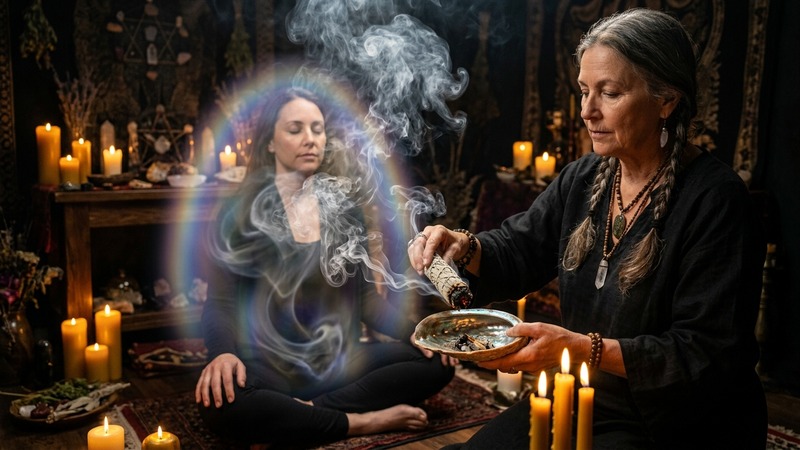
Practice 5: Smudging and Smoke Traditions
Most cultures have a smoke practice. In Indian homes this is typically dhoop, agarbatti, camphor or sambrani. Elsewhere it may be sage, palo santo or frankincense.
The usual method is to light the material, let it smoke rather than flame, and pass it slowly around the body from feet to head and down the back, holding an intention while doing so.
Three notes worth making:
- White sage has been heavily over-harvested and carries specific ceremonial meaning for particular Native American communities. Many practitioners prefer locally traditional materials for both reasons.
- Smoke is not suitable for everyone. Avoid it entirely around asthma, other respiratory conditions, pregnancy, infants and birds.
- Fire safety is not optional. Use a proper heat-resistant holder, never leave anything burning unattended, and ventilate the room throughout.
Sound, breath and water are complete practices on their own where smoke is not appropriate.
Practice 6: Visualization
Visualization requires nothing but a few quiet minutes, which makes it the most portable of these practices.
A common sequence:
- Stand or sit with eyes closed and feet flat on the floor.
- Picture a column of clear light entering at the crown and moving slowly downward through the body.
- Imagine it carrying the day’s residue down and out through the feet into the ground.
- Repeat three times, slowly.
- Finish by picturing yourself as you want to feel for the rest of the evening.
If you do not visualise easily, and many people do not, use physical sensation instead. Attention moving downward through the body works just as well as imagery.
Practice 7: Reiki and Energy Healing
For those who practise, Reiki self-treatment is often used as a cleansing practice, particularly by people who work with others professionally.
Practitioners typically use hands-on self-treatment at the end of the working day, sometimes with particular attention to the hands, head and chest. Those who have not trained may prefer to receive a session instead, and a structured energy balancing consultation is one way to be guided through the process rather than working alone.
Because the chakras are traditionally described as feeding the layers of the field, many practitioners combine aura work with chakra practice. Our guide to clearing and balancing the energy centres covers that side in detail.
Practice 8: Grounding
Grounding is the closing step, and skipping it is the most common mistake in the whole sequence. Cleansing without grounding leaves many people feeling light in an unsettled way rather than a clear one.
Grounding practices:
- standing barefoot on grass or earth for a few minutes
- feet flat on the floor with attention on the contact, for one minute
- eating something warm, or a short walk outdoors
- physical work with the hands: cooking, gardening, cleaning
One minute is the minimum, and it makes the difference between a practice that steadies you and one that leaves you floating. The two-way relationship between physical state and inner steadiness is explored further in our writing on integrated mind and body practice.
Energy Shielding After Cleansing
Traditionally, shielding follows cleansing. Having cleared the field, practitioners set a boundary before re-entering demanding environments.
The symbolic practices, such as picturing a boundary of light around yourself before a difficult meeting, function as mental preparation. They are not a barrier in any physical sense, and they work in the way a pre-match routine works: not magic, but genuinely steadying.
The practical side of shielding matters more and is often skipped. Who you spend draining hours with, how much conflict you absorb before bed, what you agree to when you meant to say no. Our full guide to protecting your energy in daily life covers both the symbolic and the practical.
How Often Do People Practise Cleansing?
There is no rule, and traditions differ. Common rhythms:
- Daily: a short practice on returning home, usually breath or a minute of grounding
- Weekly: a fuller practice, often a salt bath with sound or smoke
- After specific events: hospitals, funerals, conflict, crowded travel
- Professionally: practitioners often cleanse briefly between clients
If you find yourself cleansing constantly and still feeling unsettled, treat that as information rather than a reason to cleanse more. Compulsive cleansing usually points to anxiety that deserves attention in its own right, and talking to a doctor or someone you trust is the more useful step.
Common Mistakes
Skipping the grounding. The single most common error. Always close by settling into the body.
Treating it as a substitute for rest. If you are exhausted, you need sleep. No practice replaces it.
Cleansing instead of addressing the cause. If one relationship consistently drains you, that is a conversation to have, not a field to clear repeatedly.
Expecting something dramatic. Most sessions feel mild. That is normal and does not mean it failed.
Paying someone to fix your aura. Be wary of anyone who tells you your field is damaged, attacked or cursed, and offers to repair it for a fee. Fear-based selling is the clearest warning sign in this field.
Ignoring safety. Unattended flames, smoke around respiratory conditions and very hot baths cause real harm every year.
Using it in place of healthcare. Persistent exhaustion, low mood or anxiety are medical matters.
Frequently Asked Questions
What are the benefits of aura cleansing?
Practitioners commonly describe a sense of lightness, clearer thinking, easier sleep, less carry-over of other people’s moods and a stronger sense of your own boundaries. These are traditional associations and reported experiences rather than demonstrated effects. The reliable benefit is having a deliberate transition ritual between one part of the day and the next.
How do I cleanse my aura at home?
Choose one practice and do it properly. A salt bath, ten minutes of meditation, three minutes of slow breathing, sound from a bell or humming, smoke passed around the body, or a downward visualization all work. Whichever you pick, finish by grounding for at least a minute.
What are the signs that your aura needs cleansing?
Traditionally associated signs include feeling drained after certain people, carrying others’ moods home, heaviness after crowded places and difficulty settling in the evening. These are not symptoms of anything and all have ordinary explanations. If any of it is persistent or distressing, speak to a doctor rather than treating it as an energetic issue.
How often should you cleanse your aura?
There is no rule. Many practitioners do something brief daily on returning home, a fuller practice weekly, and an additional cleanse after hospitals, funerals, conflict or crowded travel. Those who work with people professionally often cleanse between clients. Choose a rhythm you will actually maintain.
Does a salt bath really cleanse your energy?
Within spiritual tradition, salt is understood as an absorbing and purifying material, and salt baths are among the most widely used cleansing practices. There is no evidence of a physical energetic effect. A warm bath with a deliberate intention is restful and marks a transition, which is worthwhile on its own terms.
Can you cleanse your aura without smudging?
Yes, entirely. Meditation, breathwork, a salt bath, sound, visualization and grounding form a complete practice with no smoke involved. Smoke-free methods are the right choice for anyone with asthma or other respiratory conditions, during pregnancy, and in homes with infants or birds.
Is aura cleansing scientifically proven?
No. The aura belongs to spiritual tradition rather than physiology, no aura has been measured, and no cleansing practice has demonstrated a physical effect. The practices remain useful as deliberate pauses and transition rituals, and should be understood in that light rather than presented as anything more.
Bringing It Together
Aura cleansing, stripped of overclaim, is a set of simple practices for marking a transition: a bath, a few minutes of breath, a bell, a walk barefoot on grass. Practitioners understand them as clearing the field. Described plainly, they are deliberate acts of putting the day down.
Pick one practice rather than collecting all eight, do it regularly, and always close by grounding. Keep the claims modest and the safety precautions seriously.
At The Golden Lotus, we treat energy work as awareness and discipline rather than as a service performed on someone. If you would like guided support alongside your own practice, our personal energy healing session is offered in that spirit, and questions about what it involves are always welcome first.
Have Questions About This Practice?
Whether you want to learn Reiki, explore Mesmerism, or book a 1-on-1 private energy alignment session, we welcome your questions.