
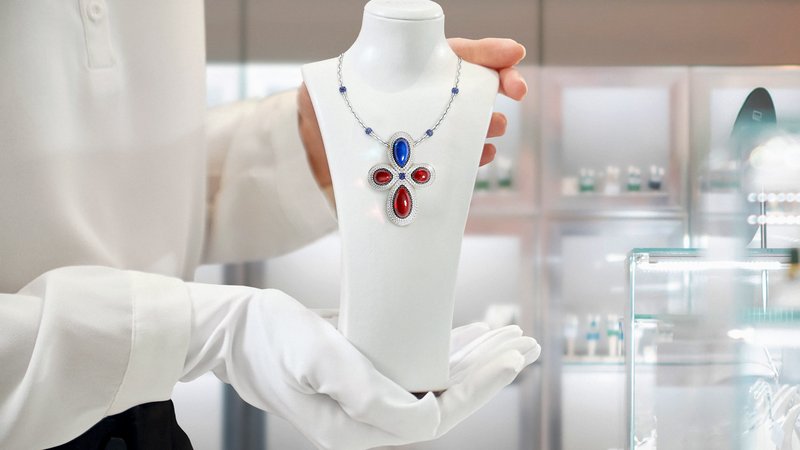
A chakra necklace carries seven gemstones in the traditional colour sequence, from red at the root to violet or white at the crown. Worn as a pendant or strand, it represents the seven energy centres described in yogic tradition and the qualities each is associated with.
Its meaning is the same as any seven-stone piece: a compact reminder of a balanced life covering stability, creativity, confidence, warmth, honesty, clarity and stillness.
This guide covers the colours and their meanings, the stones typically used, how a necklace differs from a bracelet in practice, how to wear and care for one, and what it can honestly be said to do.
To be clear from the start: the energetic meanings attributed to these stones belong to spiritual tradition. A necklace does not balance anything automatically, and no piece of jewellery treats any condition.
What Is a Chakra Necklace?
A chakra necklace is jewellery incorporating seven stones matched by colour to the seven chakras, usually arranged in order.
Common formats:
- Vertical pendant. Seven small stones set in a line, worn so the sequence runs from bottom to top as it would on the body. The most symbolically consistent design.
- Beaded strand. Seven gemstone beads strung among neutral beads, worn as a necklace rather than a pendant.
- Tree of life or mandala setting. Seven stones arranged within a decorative frame, a popular and less literal design.
- Single-stone pendant. One stone corresponding to the centre you are working with, worn alone rather than as a set.
Construction varies widely. Better pieces use genuine gemstone rather than dyed glass, set in sterling silver or a durable alloy, on a chain that suits daily wear.
The design is modern, as is the case with all chakra jewellery. The chakra system it references is ancient, but wearing seven colour-matched stones is a contemporary practice rather than a classical one. That does not reduce the personal meaning a piece can carry.
The Meaning of Seven Chakra Jewellery
Seven-stone pieces work on three levels at once.
Symbolic. The sequence represents a whole person: practical foundation at one end, reflective awareness at the other, and everything human in between. Wearing all seven is a statement of wanting balance rather than emphasising one quality.
Intentional. Many people attach a specific personal meaning when they begin wearing a piece, often marking a decision or a period of change.
Practical. A necklace sits at the chest, near the heart centre in traditional terms, and you notice it when you catch it in a mirror or feel it move. Each notice is a small prompt to check your breathing and your state.
The third level requires no belief at all, and it is the one that most reliably changes anything.
The Seven Chakra Colours
| Chakra | Colour | Typical Stone | Traditional Association |
|---|---|---|---|
| Root (Muladhara) | Red | Red jasper, garnet | Safety, grounding, stability |
| Sacral (Svadhisthana) | Orange | Carnelian, orange aventurine | Creativity, emotion, enjoyment |
| Solar Plexus (Manipura) | Yellow | Citrine, tiger’s eye | Confidence, willpower, decisions |
| Heart (Anahata) | Green | Green aventurine, jade | Compassion, connection, warmth |
| Throat (Vishuddha) | Blue | Blue lace agate, sodalite | Expression, honesty, voice |
| Third Eye (Ajna) | Indigo | Lapis lazuli, sodalite | Clarity, insight, perception |
| Crown (Sahasrara) | Violet or white | Amethyst, clear quartz | Awareness, stillness, perspective |
Worth knowing: the rainbow colour scheme is a modern convention rather than a classical one. Traditional Sanskrit sources describe colours quite differently, often assigning them to petals and elements rather than to the centre as a whole. The modern sequence is memorable and useful, and it is not ancient.
Common Stones Used in Chakra Necklaces
Makers vary, and there is no single authoritative combination. The most frequently used:
- Root: red jasper, garnet, black onyx
- Sacral: carnelian, orange aventurine, sunstone
- Solar plexus: citrine, tiger’s eye, yellow jasper
- Heart: green aventurine, jade, rose quartz
- Throat: blue lace agate, amazonite, turquoise
- Third eye: lapis lazuli, sodalite, amethyst
- Crown: amethyst, clear quartz, howlite
Two quality notes worth knowing before buying.
Dyed stones are common. Dyed howlite is regularly sold as turquoise, and dyed quartz stands in for several colours in inexpensive pieces. A reputable seller will tell you plainly what is natural, dyed or reconstituted.
Setting matters more in a necklace than a bracelet. Small stones set in a pendant can work loose over time, so check that they are properly secured rather than glued.
Necklace vs Bracelet
Both formats are used, and they suit different things.
| Chakra Necklace | Chakra Bracelet | |
|---|---|---|
| Visibility to you | Occasional, mostly in a mirror | Constant, in your line of sight all day |
| Visibility to others | Higher, sits at the chest | Lower, easily covered by a sleeve |
| Tactile use | Limited, one pendant to hold | Excellent, bead by bead through the sequence |
| During meditation | Held or worn at the chest | Moved through bead by bead |
| Durability | Chain and settings can fail | Elastic cord is the weak point |
| Daily wear | Easy, removed for sleep | Easy, worn continuously by many |
| Traditional placement | Near the heart centre | On the wrist, no traditional significance |
| Best for | Symbolic and aesthetic wear | Practice and constant reminder |
The practical difference: a bracelet is better as a working tool because you see and touch it constantly. A necklace is better as a symbolic and visible piece, and it sits closer to the heart centre, which some practitioners consider meaningful.
Many people wear both, and our Seven Chakra Bracelet is designed for the tactile, bead-by-bead use a necklace cannot offer.
How to Wear Chakra Jewellery
A few practical points.
- Orientation. For a vertical pendant, wear it so the root stone sits lowest and the crown highest, matching the body’s sequence. Most pendants are designed this way, and it is worth checking.
- Length. A pendant sitting at or just above the sternum places it near the heart centre in traditional terms. Longer chains sit below it.
- Chain strength. Fine chains are the usual failure point. A slightly heavier chain will outlast several delicate ones.
- Layering. Chakra pendants layer reasonably with a plain chain. Avoid layering against a heavier pendant that will knock the stones.
- Putting it on deliberately. Thirty seconds of attention while fastening it is the difference between jewellery and practice.
Can You Wear It Every Day?
Yes, with ordinary jewellery care.
Take it off for:
- showering, swimming and bathing, since water damages settings and porous stones
- applying perfume, lotion or hairspray, which dull stones and tarnish metal
- the gym and heavy physical work
- sleeping, where chains tangle and settings catch on bedding
Storage: lay it flat in a soft pouch or a jewellery box rather than hanging it, and keep it away from other pieces that could scratch the stones.
Checking: look at the settings every few months. Stones working loose is the most common failure and it happens gradually enough to notice if you look.
Sustained sunlight fades amethyst, citrine, rose quartz and several other stones, so avoid leaving a piece on a bright windowsill.
Using Chakra Jewellery During Meditation
A necklace is less tactile than a bracelet, so the practice is slightly different.
A simple ten-minute version:
- Sit comfortably and hold the pendant between finger and thumb, or rest your hand over it at the chest.
- Take five slow breaths, exhaling longer than you inhale.
- Move attention through the seven centres in order, from base of the spine to crown, resting five breaths at each.
- Use the pendant as the anchor for attention rather than trying to feel anything in it.
- Finish by returning attention to the base of the spine and then to your feet, for a full minute.
That last step matters. Ending at the crown leaves many people scattered rather than settled.
If you prefer something more tactile, a seven-bead bracelet moved through one bead per breath suits the sequence better. For fuller routines with or without jewellery, our guide to clearing and balancing the energy centres sets out the practices.
How to Cleanse It
Cleansing is the traditional practice of clearing a piece before resetting an intention. Necklaces need careful handling because of the metal and settings.
Safe methods:
- pass it briefly through incense, dhoop or camphor smoke
- ring a bell or singing bowl near it
- rest it on a piece of selenite or clear quartz overnight
- place it beside, not in, a small bowl of dry salt
- hold it, breathe slowly, and mentally clear it
Avoid water and salt water entirely. Water damages settings, tarnishes metal and harms porous stones such as turquoise, howlite and lapis lazuli. Salt is corrosive to metal and will dull a chain over time.
Monthly is a reasonable rhythm. Our full method is in the guide to caring for crystal jewellery.
How to Recharge It
Recharging restates the purpose after clearing.
- Moonlight, overnight on a windowsill or a shaded surface, traditionally on the full moon.
- Brief morning sunlight, an hour at most, and not for amethyst, citrine or rose quartz, which fade.
- Earth contact, resting it on a cloth on soil rather than directly, to protect the metal.
- Spoken intention, holding it and naming what you are working on before putting it on.
Keep sun exposure short. A chakra necklace contains several stones that fade, and the piece will look noticeably different after months on a bright sill.
Does a Chakra Necklace “Balance” Chakras Automatically?
No, and this deserves a straight answer since it is what most people actually want to know.
Wearing a chakra necklace does not balance, align or clear anything by itself. There is no evidence that stones affect the body, chakras are not anatomical structures, and no piece of jewellery produces an effect on the wearer independent of what the wearer does.
What the tradition says: the stones correspond to the centres and wearing them keeps those qualities present. That is a symbolic framework, coherent on its own terms, held sincerely by many practitioners.
What can be said without overclaiming: a necklace you notice several times a day reminds you of an intention you set, and reminders influence behaviour. Someone who glances at their pendant and remembers to slow down has received a real benefit from a modest mechanism.
Be wary of any seller claiming a piece balances chakras automatically, clears blockages or protects you from anything. Those claims overstate what the tradition itself says, and the practice is at its best when it is quiet and honest about its scope.
Frequently Asked Questions
What does a chakra necklace mean?
It carries seven stones in the traditional colour order, representing the seven energy centres described in yogic tradition: stability, creativity, confidence, compassion, honesty, clarity and stillness. Wearing the full sequence symbolises wanting balance across all of them rather than emphasising one quality.
What are the seven chakra stones in a necklace?
Typically red jasper or garnet for the root, carnelian for the sacral, citrine or tiger’s eye for the solar plexus, green aventurine for the heart, blue lace agate or amazonite for the throat, lapis lazuli or sodalite for the third eye, and amethyst or clear quartz for the crown. Combinations vary by maker.
Does a chakra necklace balance your chakras?
No. No jewellery balances, aligns or clears anything by itself, and there is no evidence that stones affect the body. The tradition treats the stones as corresponding to the centres, and the dependable benefit is that a visible piece reminds you of an intention, which does influence behaviour.
Should I wear a chakra necklace or bracelet?
A bracelet works better as a practice tool, since it is constantly in your line of sight and can be moved bead by bead during meditation. A necklace is more visible to others, sits nearer the heart centre in traditional terms, and works better as a symbolic and aesthetic piece. Many people wear both.
Can you wear a chakra necklace every day?
Yes, with ordinary jewellery care. Remove it for showering, swimming, perfume, lotion, the gym and sleeping. Store it flat rather than hanging, keep it out of sustained sunlight since several of the stones fade, and check the settings every few months for stones working loose.
How do you cleanse a chakra necklace?
Use incense smoke, sound from a bell, an overnight rest on selenite, or dry salt placed nearby without contact. Avoid water and salt water entirely, since both damage settings, tarnish metal and harm porous stones such as turquoise, howlite and lapis lazuli.
Which way up should a chakra pendant be worn?
For a vertical pendant, the root stone should sit lowest and the crown highest, matching the body’s sequence. Most are designed this way, though it is worth checking when you buy. For mandala or tree of life settings, orientation does not apply.
How can I tell if the stones are real?
Ask the seller directly whether stones are natural, dyed or reconstituted, and expect a clear answer. Dyed howlite is commonly sold as turquoise, and dyed quartz substitutes for several colours in inexpensive pieces. Very uniform, vivid colour across a cheap piece usually indicates dye.
Bringing It Together
A chakra necklace is a small wearable summary of the qualities most people are trying to hold onto: steadiness, creativity, confidence, warmth, honesty, clarity and stillness. Its usefulness lies in how often you notice it and what you do in that moment.
Choose an honestly made piece, wear it deliberately, keep it away from water and strong sun, check the settings occasionally, and pair it with a short practice rather than expecting it to work alone.
At The Golden Lotus, our pieces are prepared as companions to intention and awareness, never as guarantees. Our Seven Chakra Bracelet is the piece most of our students wear for daily practice, and the full collection is worth a look if you would prefer something else.
Have Questions About This Practice?
Whether you want to learn Reiki, explore Mesmerism, or book a 1-on-1 private energy alignment session, we welcome your questions.