Becoming an energy healer follows a recognisable path: choose a modality, build a daily personal practice, train under a qualified teacher, learn the ethics before you take clients, practise under guidance, and continue advanced training over years rather than months.
There is no licence to obtain and no universal qualification, which means the standard is set entirely by your teacher and by you.
This roadmap covers what energy healing is and is not, the main modalities, the seven steps of training, how energy healers differ from Reiki practitioners specifically, what certification actually means, and the mistakes that beginners reliably make.
Said plainly at the outset: energy healing is a spiritual and relaxation practice. It does not treat, cure or manage any medical or psychological condition, and learning it does not qualify anyone to work with illness.
What Is an Energy Healer?
An energy healer is someone trained in a practice that works with attention, presence and traditional concepts of subtle energy, offered to others through sessions.
In practice, a session usually involves the client resting, clothed, while the practitioner works through a structured sequence with hands on or above the body, or at a distance. Most clients describe the experience as deeply restful.
What an energy healer is not:
- a healthcare professional of any kind
- someone able to diagnose conditions, energetically or otherwise
- a substitute for a doctor, therapist or any prescribed treatment
- someone with access to information about you that you have not shared
The word healer causes most of the confusion here. Within these traditions it describes the practice, not a claim to cure anything. Practitioners who understand that are usually the ones worth learning from.
What Does Energy Healing Mean?
Energy healing describes a family of practices built on the idea of a vital force running through the body, known as ki in Japanese traditions, prana in Indian ones, and by other names elsewhere.
That concept is ancient, coherent within its own frameworks, and central to how these practices are taught. It is not a physiological mechanism. No subtle energy has been measured, and studies of energy healing have not demonstrated effects beyond relaxation and expectation.
Both statements can sit together honestly. The practices have genuine value as structured rest, attention and ritual. What they do not have is a demonstrated physical mechanism, and a practitioner who presents one is overstating what is known.
The wider relationship between physical state, attention and inner steadiness is explored in our writing on integrated mind and body practice.
Can Anyone Learn Energy Healing?
Yes. No special sensitivity, ability or background is required, and teachers say this consistently.
You do not need:
- prior spiritual experience
- any particular religion, or any religion at all
- intuitive or psychic ability
- a medical or anatomical background
What genuinely helps:
- willingness to practise daily, which is the real requirement
- patience with slow, unglamorous progress
- a teacher you can question
- honesty about your own experience, including when you feel nothing
Most people who abandon this path do not lack ability. They took a course and never built the daily habit.
Step 1: Understand the Different Modalities
Before training, know what you are choosing between. These are related but genuinely different disciplines.
Reiki. Japanese, lineage-based, transmitted through attunement from teacher to student. Structured into levels with defined content. The most widely taught energy practice worldwide.
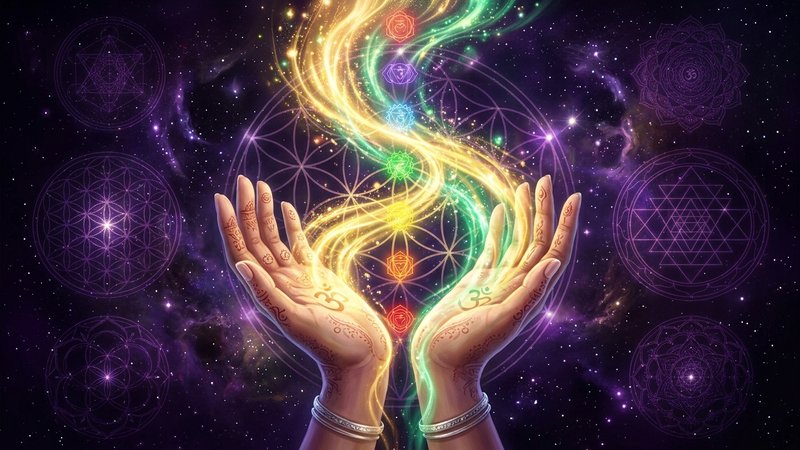
Chakra practices. Working with the seven energy centres described in yogic tradition, through meditation, breath and attention. Often taught alongside other modalities rather than alone.
Spiritual energy work. A broader category covering practices that are lineage-specific or school-specific, varying considerably in structure and quality.
Magnetism and mesmerism. Older European traditions concerned with presence, attention and personal magnetism. Distinct from Reiki in both method and history, and still taught in some schools.
Meditation. Not an energy modality in itself, but the foundation nearly every tradition rests on. Practitioners who meditate consistently tend to develop faster in everything else.
Other traditions. Pranic practices, sound-based work and various regional traditions each have their own structures and requirements.
Choose one to begin with. Studying three at once produces shallow familiarity with all of them.
Step 2: Start With Personal Practice
Before any client work, before any thought of certification, build the daily habit.
A workable structure, twenty to thirty minutes:
- Sit quietly for two minutes and settle.
- Ten minutes of meditation or breath practice.
- Hands-on self-treatment through your positions, once trained.
- Close with a moment of gratitude or reflection.
On difficult days, ten minutes is enough. Consistency matters far more than duration.
This stage cannot be compressed. Sensitivity develops through repetition over months, and practitioners who skip it end up with technique and no judgement about when to use it.
Step 3: Choose Proper Training
The teacher matters more than the course description. Ask these before paying anything:
- What is your lineage? They should be able to name their teacher and trace the line back.
- What exactly does the course cover? Content varies enormously between schools.
- What support exists afterwards? Real questions arrive weeks later, not during the course.
- What do you expect from students between levels? A teacher with no expectations is a warning sign.
- What do you say this practice can and cannot do? Any claim to cure disease should end the conversation.
- How many students per course? Smaller groups mean more attention.
Two further warning signs: pressure to progress quickly, and discouragement from asking questions. Good teachers welcome scrutiny.
Our foundational Reiki training covers Levels 1 and 2 in sequence, and the energy magnetism course takes a different route into the same territory through presence and personal magnetism. Those who want to understand how several traditions differ, rather than treating them as one, may find the combined spiritual master programme more useful.
Step 4: Learn Ethics and Boundaries
Decide these in advance rather than improvising when a session goes somewhere unexpected.
Consent, every time. Explicit permission before any session, including distance work. Agree touch or no touch beforehand, and honour it.
No diagnosis, ever. Not medical, not psychological, not energetic framed as either. Describing what you noticed is one thing. Telling someone what is wrong with them is another.
No interference with treatment. Never suggest reducing medication, delaying an appointment or abandoning a treatment plan. Actively encourage clients to continue medical care.
Honest claims. In conversation and especially in writing. Marketing is where most ethical failures in this field actually happen.
Confidentiality. What is shared stays in the session. No anecdotes, no identifying details, no discussion at home.
Clear limits. You are not a therapist, a friend or an authority on someone’s life. Clients sometimes want all three.
Referral. Persistent low mood, anxiety, trauma, disordered eating, substance difficulties, thoughts of self-harm, or any physical symptom. Say plainly that this needs a qualified professional, even when it costs you the booking.
Step 5: Practise Under Guidance
Move outward gradually.
- First, yourself, daily, for months.
- Then, family and willing friends, without charging.
- Then, a wider circle, still usually without charging.
- Throughout, keep contact with your teacher and bring them what confused you.
Things worth experiencing before you charge anyone: a session where nothing noticeable happens, a session where the client becomes emotional, a client who asks a question outside your scope, and a client who wants more than the practice can offer. None of these are unusual, and all of them are easier the second time.
Receiving sessions from other practitioners is part of this stage too. Our personal energy healing sessions are used by trainees for exactly that reason, since being treated teaches things practising cannot.
Step 6: Develop Client Communication
Most of a practitioner’s quality shows up in conversation rather than in the session itself.
- Explain plainly what the session involves, how long it lasts, and what it does and does not address.
- Ask what they want from it and listen to the answer rather than assuming.
- Set expectations honestly, including that many people feel nothing dramatic.
- Listen without steering. Clients notice this more than any technique.
- Say I don’t know when you do not know. It builds more trust than an invented answer.
- Close properly, with a few minutes to sit up, water, and a short conversation.
Avoid the two most common failures: describing impressions as though they were facts about the client, and filling silence because it feels uncomfortable.
Energy Healer vs Reiki Practitioner
These terms overlap, which causes confusion. Reiki practitioners are energy healers. Not all energy healers are Reiki practitioners.
| Energy Healer (general) | Reiki Practitioner | |
|---|---|---|
| Scope | Broad term covering many modalities | Specific to the Usui system and its branches |
| Training route | Varies widely by school and tradition | Defined levels with attunement at each |
| Attunement | Not required in all modalities | Central, and cannot be self-given |
| Lineage | May or may not be traceable | Traceable back through teachers to Usui |
| Structure | Often flexible or practitioner-defined | Standardised sequence, with lineage variations |
| Technique | May include visualization, breath, magnetism, sound | Hand positions, symbols from Level 2, distance work |
| Verifying credentials | Harder, since standards vary | Easier, since lineage can be checked |
The practical implication for someone choosing a path: Reiki offers a clearer structure and a verifiable lineage, which is why many practitioners begin there even if they later broaden.
Do You Need Certification?
In most countries, energy healing is unregulated. There is no licence, no legal qualification and no governing body covering the field.
A certificate records that a particular teacher trained you at a particular level. Its worth depends entirely on that teacher.
What it does provide:
- documented evidence of completed training
- a traceable lineage in transmitted practices such as Reiki
- reassurance for clients with no other way to assess you
What it does not provide:
- authority to diagnose or treat anything
- a recognised professional qualification
- proof of competence, which comes only from practice
If you intend to work with the public, look separately into professional insurance and any local regulations. These sit outside the training itself and no course will handle them for you.
How Long Does Training Take?
It depends on the modality, and the courses are always the short part.
In Reiki, individual levels typically run over one or two days each, but the practice periods between them are where the training actually happens: commonly three weeks or more before Level 2, six months to a year before Level 3, and a year or more before teacher training. Beginner to teacher therefore takes two to three years realistically.
Other modalities vary. Study-based disciplines take longer. Meditation-centred practices have no endpoint at all.
Anyone offering a complete path in a weekend is selling certificates. Treat that as disqualifying.
Can You Learn Energy Healing Online?
Yes, and online training is entirely legitimate when the teacher is good.
Online suits those limited by geography, schedule, mobility or health. Attunement at a distance is consistent with how distance practice works within these traditions, and pacing is often better.
In-person suits those who want hands-on correction, practice on real people, and the atmosphere of a group. Best when there is a good teacher within reach.
What matters more than format: lineage, course content, ongoing support, group size and honest claims. A poor in-person course is worse than a good online one.
Common Beginner Mistakes
Collecting certificates instead of practising. The most common failure by a wide margin.
Rushing the levels. Each stage adds tools. Tools need judgement, and judgement comes from the practice period you skipped.
Overclaiming. Especially in writing. Saying a practice supports relaxation is honest. Implying it treats conditions is not, and it is the fastest way to damage both clients and your own standing.
Working on people without consent. Sending distance work to someone who did not ask is not generosity.
Treating impressions as facts. What you noticed in a session is your impression. Presenting it as information about the client’s body or life is where real harm starts.
Charging too early. Practise for a long time before money enters the relationship.
Neglecting your own practice once you start teaching or treating. A practitioner who has stopped practising is coasting, and clients sense it.
Ignoring the boring parts. Insurance, record keeping, cancellation policies, local law. Unglamorous, and they protect everyone.
Frequently Asked Questions
How do I become an energy healer?
Choose one modality, build a daily personal practice, and train under a teacher whose lineage you can trace. Learn the ethics before taking clients, practise first on yourself and then on willing friends without charging, and continue training over years. There is no licence, so standards depend on your teacher and on you.
Can anyone learn energy healing?
Yes. Teachers consistently say no special sensitivity, ability or background is required. What matters is willingness to practise daily and patience with slow progress. Most people who abandon the path did not lack ability, they simply never established the daily habit after completing a course.
How long does it take to become an energy healer?
The courses are short, often one or two days per level, but the practice periods between them are where training actually happens. In Reiki, beginner to teacher realistically takes two to three years. Anyone offering a complete path in a weekend is selling certificates rather than teaching.
Do you need certification to practise energy healing?
In most countries the field is unregulated, so no licence exists and no legal qualification is required. A certificate documents the training you completed and the lineage behind it, which has real value for clients, but it grants no authority to diagnose or treat. Check insurance and local regulations separately.
What is the difference between an energy healer and a Reiki practitioner?
Reiki practitioners are energy healers, but not all energy healers practise Reiki. Reiki is a specific lineage-based system with defined levels, attunements and a traceable line back to Usui. The broader term covers many modalities with varying structures, which makes credentials harder to verify.
Can you learn energy healing online?
Yes, and online training is legitimate when the teacher is good. Distance attunement is consistent with how these traditions understand distance practice, and online courses often offer better pacing and access. Lineage, content, support and honest claims matter far more than whether training is remote.
Does energy healing actually work?
It is a spiritual and relaxation practice, not a medical treatment. No evidence shows it treats or cures any condition, and no subtle energy has been measured. Many people find sessions deeply restful and meaningful, which is a genuine benefit. It should never delay or replace care from a qualified doctor.
Bringing It Together
Learning how to become an energy healer is mostly a matter of choosing one practice and staying with it far longer than feels necessary. The courses provide structure, the teacher provides correction, and the daily practice in between provides everything else.
Be honest about what the work does, refer people when they need more than you can offer, and let your claims stay smaller than your practice. That restraint is what makes a practitioner worth going to.
At The Golden Lotus, we teach in traditional sequence with the practice periods intact, and we are candid about which stage suits a given student. If you are serious about this path, our full range of training is a place to start, and we would rather answer your questions first than enrol you quickly.
Have Questions About This Practice?
Whether you want to learn Reiki, explore Mesmerism, or book a 1-on-1 private energy alignment session, we welcome your questions.