
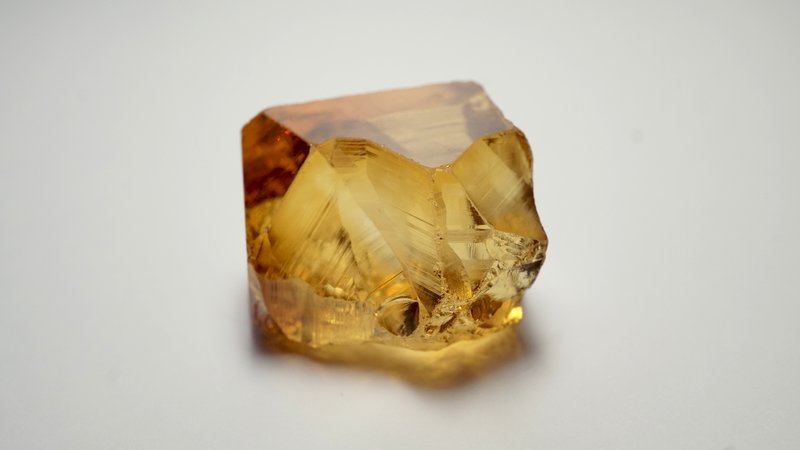
Positive energy stones are the crystals most often kept for warmth, clarity and steadiness rather than for protection specifically: clear quartz, amethyst, citrine, rose quartz, black tourmaline, tiger’s eye, carnelian, green aventurine, selenite and labradorite.
Each carries its own traditional association, and most people keep two or three rather than a collection.
This guide covers all ten, where they are typically placed, how positive energy stones differ from protective ones, and how to choose, cleanse and recharge them.
The framing matters here. These are traditional and symbolic associations, not demonstrated properties. Crystals do not measurably alter a room, a mood or anyone’s health. What they reliably do is hold an intention somewhere visible, which genuinely affects how people treat a space over time.
What Are Positive Energy Stones?
Within crystal traditions, certain stones are associated with qualities people want more of: clarity, calm, warmth, confidence, creativity. They are distinguished loosely from protective stones, which are associated with boundaries and with keeping something out.
The stones themselves are ordinary minerals with measurable physical properties. The qualities attributed to them belong to spiritual tradition rather than to science, and no evidence supports the idea that a mineral in a room changes anything about it.
That is not an argument against the practice. A stone placed deliberately becomes a marker of a decision, and you encounter it repeatedly. Over weeks that reminder shapes behaviour, which is a modest mechanism and a real one.
Two principles follow:
- Fewer stones used consistently beat many kept casually.
- The practice works alongside the ordinary things that make a space feel good: air, light, order and the relationships inside it.
10 Popular Positive Energy Stones
1. Clear Quartz
Traditional association: clarity and openness.
The general-purpose stone of crystal practice, used alone and alongside others to reinforce an intention. Durable, inexpensive and easy to identify, which makes it the sensible first purchase for anyone starting out.
2. Amethyst
Traditional association: calm, reflection and stillness.
The most commonly kept bedroom and meditation stone, and the gentlest on this list. Linked to the third eye and crown centres in chakra practice.
Care note: amethyst fades in sustained sunlight, so charge it in moonlight or brief early sun only.
3. Citrine
Traditional association: warmth, confidence and optimism.
Linked to the solar plexus and often placed in a workspace or a room that feels functional rather than welcoming.
Buying note: most deep amber citrine sold commercially is heat-treated amethyst rather than natural citrine, which is usually paler. Neither is more valid for practice, but you should know what you are buying.
4. Rose Quartz
Traditional association: compassion, gentleness and self-acceptance.
Linked to the heart chakra and kept in bedrooms and shared living spaces. The association covers self-compassion as much as affection towards others, which is the part practitioners tend to emphasise.
Fades with heavy sun exposure, like most quartz varieties.
5. Black Tourmaline
Traditional association: grounding and boundaries.
The most widely used protective stone in modern practice, included here because grounding is often what people actually mean by wanting better energy in a space. Usually placed at an entrance or a desk.
Practical note: raw pieces are brittle and shed fragments, so choose tumbled stones near children or pets.
6. Tiger’s Eye
Traditional association: courage, steady judgement and grounded confidence.
Golden brown with a distinctive banded shimmer. Associated with holding your nerve rather than with calm, which makes it a common workplace and bracelet stone.
7. Carnelian
Traditional association: creativity, warmth and momentum.
Linked to the sacral chakra and usually chosen when creative work has stalled or when life has become purely functional. Often kept in a studio, workroom or wherever you make things.
8. Green Aventurine
Traditional association: ease, optimism and new beginnings.
Linked to the heart chakra alongside rose quartz, with green traditionally representing connection outward to others where pink represents inward compassion. A common choice for someone starting something.
9. Selenite
Traditional association: lightness and clearing, including clearing other stones.
Used as a clearing stone in its own right and as the standard tool for cleansing other crystals.
Important care note: selenite is soft, around 2 on the Mohs scale, and water-soluble. Never wash it, keep it out of damp rooms, and handle it gently since it scratches and flakes easily.
10. Labradorite
Traditional association: personal boundaries and intuition.
Shows a distinctive flash of colour at certain angles. Commonly suggested for people in caring, teaching or client-facing work, where absorbing other people’s states is an occupational pattern.
Best Stones for the Home
Placement conventions and the reasoning behind each:
- Entrance: black tourmaline, marking the boundary between outside and inside.
- Main living room: clear quartz or selenite for clarity, rose quartz where the aim is warmth between people.
- Bedroom: amethyst. Most practitioners keep the darker and more bracing stones elsewhere.
- Kitchen: citrine, where a functional room could use some warmth.
- Creative space: carnelian.
Two well-placed stones do more than ten spread thinly. A reasonable start is one at the entrance and one where you actually spend your time.
Stones for Meditation
Consistency matters more than variety here.
- Keep the same stone in the same place each time. Familiarity does most of the work.
- Clear quartz or amethyst are the usual choices for a seated practice.
- Add a grounding stone at floor level if you tend to feel scattered afterwards.
- Hold one stone rather than arranging several.
Working with a single stone for several weeks teaches more than rotating through a collection, because the point is a familiar object your attention recognises.
Stones for Workspaces
Small and discreet works better than a display.
- Desk: citrine for warmth, clear quartz for focus, or smoky quartz if the room feels heavy.
- Pocket: tiger’s eye or hematite, for touching during a difficult moment.
- Bag: labradorite, particularly in client-facing roles.
- Worn: a bracelet, which is the most practical format since it is always with you.
Set yourself one rule: when you notice the stone, take one slow breath and drop your shoulders. That single habit produces more benefit than any belief about the mineral.
Positive Energy vs Protection Crystals
The distinction is loose within the tradition, and it is still useful.
| Positive Energy Stones | Protection Stones | |
|---|---|---|
| Traditional purpose | Inviting a quality in | Keeping something out |
| Typical colours | Clear, pink, yellow, green, violet | Black, grey, dark brown |
| Common examples | Clear quartz, amethyst, citrine, rose quartz, green aventurine | Black tourmaline, obsidian, hematite, smoky quartz |
| Usual placement | Living spaces, bedrooms, workspaces | Entrances, thresholds, pockets |
| Associated with | Clarity, warmth, creativity, calm | Grounding, boundaries, deflection |
| Cleansing frequency | Monthly | Traditionally more often, as absorbing stones |
Most people end up with some of each, which is why several stones appear on both lists. Black tourmaline is included above precisely because grounding is often what someone means when they say a space feels wrong.
How to Choose a Crystal
Two questions narrow it quickly.
What quality do you actually want more of? Calm points to amethyst. Warmth points to citrine or rose quartz. Creative momentum points to carnelian. Steadiness under pressure points to tiger’s eye.
Which stone do you respond to? If buying in person, handle several and notice which you keep returning to. Weight, texture and colour matter more than a list.
Practical buying checks:
- ask whether a stone is natural, dyed or reconstituted, and expect a straight answer
- perfectly uniform vivid colour across an inexpensive set usually indicates dye
- tumbled and polished pieces are more practical than raw ones for daily use
- buy two or three you will use rather than a set you will store
Price is not a measure of spiritual value. A small tumbled stone carried daily does more in practice than an expensive cluster on a shelf.
How to Cleanse Crystals
Cleansing is the traditional practice of clearing a stone before setting a fresh intention.
Safe methods:
- smoke from incense, dhoop, camphor or sage
- sound from a bell, ghanti or singing bowl
- resting smaller stones on a larger piece of selenite or clear quartz overnight
- dry salt placed beside, not in contact with, the stones
- earth contact for a few hours
- a brief rinse under cool water, for hard stones such as clear quartz and amethyst
Water cautions that matter: never wet selenite, which dissolves. Avoid water for hematite, which rusts, and for porous stones including turquoise, howlite and lapis lazuli. Keep water away from elastic-strung bracelets entirely.
Monthly is a reasonable rhythm. Our full method is in the guide to caring for crystal bracelets and stones.
How to Recharge Them
Recharging restates the purpose after clearing.
- Moonlight, traditionally on the full moon. Our full moon charging ritual sets out the sequence.
- Brief early morning sunlight, an hour at most, and not for amethyst, citrine, rose quartz or smoky quartz, all of which fade.
- Earth contact, resting stones on soil for a few hours.
- Spoken intention, holding the stone and naming clearly what it is for.
The ritual works as punctuation, closing one period and opening the next.
Can You Combine Several Stones?
Yes, and there are no forbidden combinations within the tradition.
Common pairings:
- Clear quartz with anything, used to reinforce whatever intention the other stone carries
- Amethyst and rose quartz, calm and warmth, a frequent bedside combination
- Black tourmaline and hematite, both grounding, for periods that feel unsettled
- Citrine and carnelian, warmth and creative momentum, for a workspace
- Green aventurine and rose quartz, outward connection and inward compassion
Practical points: keep harder stones from resting against softer ones, since they scratch, and do not let a collection become a display you no longer notice. Two or three stones deliberately chosen work better than a shelf of them.
What Crystals Cannot Guarantee
This deserves stating plainly.
Crystals do not treat, cure or manage any medical or psychological condition. They do not attract money, love or opportunity. They do not protect anyone from harm, accident or illness, and they are never a reason to delay seeing a doctor.
The meanings attached to these stones belong to spiritual tradition and have not been demonstrated. Anyone selling them as guaranteed results or protection is overstating the case considerably.
Be especially wary of fear-based selling: being told you are cursed, under attack or energetically damaged, followed by an offer to fix it. That is exploitation, and it is the clearest warning sign in this field.
What can honestly be said: a stone you notice several times a day reminds you of an intention you set, and reminders influence behaviour. That is a modest claim and a true one.
Frequently Asked Questions
What stones are used for positive energy?
The most commonly used are clear quartz, amethyst, citrine, rose quartz, black tourmaline, tiger’s eye, carnelian, green aventurine, selenite and labradorite. Each is associated with a different quality, so the useful question is which quality you actually want more of.
Which crystal is best for good energy at home?
Clear quartz or selenite in a main living room, amethyst in a bedroom, citrine in a kitchen or workspace, and black tourmaline near the entrance. Two well-placed stones do more than a collection spread thinly, since the function is being noticed.
What is the difference between positive energy stones and protection stones?
Loosely, positive energy stones are associated with inviting a quality in, while protection stones are associated with boundaries and keeping something out. The categories overlap, and several stones appear on both lists, black tourmaline among them.
How do I cleanse positive energy stones?
Use smoke, sound, a rest on selenite overnight, dry salt placed nearby, earth contact, or a brief rinse for hard stones. Never wet selenite, which dissolves, and avoid water for hematite and porous stones. Monthly is a reasonable rhythm.
Can you keep several crystals together?
Yes, and there are no forbidden combinations. Keep harder stones from resting against softer ones, since they scratch, and resist letting a collection become a display you stop noticing. Two or three deliberately chosen stones work better than a shelf of them.
Do positive energy stones actually work?
Not in any measurable sense. Crystals do not alter a room, treat a condition or attract anything, and the associations belong to spiritual tradition rather than to evidence. What they reliably provide is a visible reminder of an intention, which does influence how you treat a space.
Which crystal should a beginner buy first?
Clear quartz, because it is durable, inexpensive, easy to identify and used across nearly every practice. Add one more matching whatever quality you actually want more of, and work with those two for a few weeks before buying anything else.
Bringing It Together
Positive energy stones earn their place as markers rather than as devices. A stone chosen for a reason and placed where you see it reminds you of a decision, and that reminder does more over months than any single ritual.
Pick two or three that match what you actually want more of, place them deliberately, cleanse and recharge them as part of your rhythm, and keep your expectations honest.
At The Golden Lotus, our stones are prepared as companions to intention and awareness, never as guarantees. If you would like a place to begin, our crystal and spiritual collection is a considered starting point, and we are happy to suggest which stone suits your situation before you buy anything.

Have Questions About This Practice?
Whether you want to learn Reiki, explore Mesmerism, or book a 1-on-1 private energy alignment session, we welcome your questions.