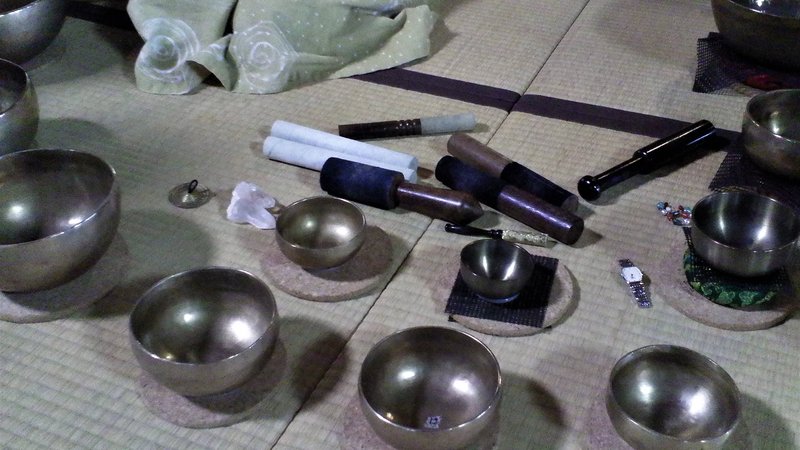
Sound healing certification courses teach the use of instruments such as singing bowls, gongs, chimes and the voice within a structured session format. Online options have expanded considerably, and quality varies enormously because the field is unregulated in most countries.
No certificate in sound healing is a healthcare qualification, and none authorises anyone to treat illness.
This guide is written to help you evaluate a course rather than to sell you one. It covers what sound healing is, what a course typically teaches, what good training should include, how long it takes, the questions to ask before enrolling, and the warning signs worth heeding.
A note on scope: The Golden Lotus does not currently offer sound healing certification. This article is independent guidance for readers researching the field, and the links in it point only to our broader spiritual learning pathways where they are genuinely relevant.
What Is Sound Healing?
Sound healing describes practices using tone, rhythm and vibration in a therapeutic or meditative setting. A session usually involves the client lying down while a practitioner plays instruments around or near them.
Its roots are old and varied. Chanting, mantra, drumming, bells and the singing of sacred texts appear across many traditions, including Indian, Tibetan, Indigenous and European ones. The modern wellness format, with singing bowls and a reclining client, is a contemporary arrangement drawing on those older practices.
What can honestly be said: many people find sound sessions deeply relaxing, and music and sound have a real and widely experienced effect on mood and attention.
What should not be claimed: that sound healing treats, cures or manages any medical or psychological condition. Research into sound and wellbeing exists, and it does not support the therapeutic claims commonly made in marketing for this field. A course presenting sound healing as a treatment is overstating what is known, and that overstatement is the main risk when choosing where to train.
What Does a Sound Healing Course Usually Teach?
Content varies, but most programmes cover some combination of:
Sound fundamentals. Tone, frequency, resonance and rhythm at a practical rather than technical level.
Singing bowls. Playing technique for both Himalayan and crystal bowls, including striking, rimming and positioning.
Gongs, bells and chimes. Technique, dynamics and safe volume, which matters more than people expect.
Voice. Toning, humming, chanting and overtone work, depending on the school.
Rhythm and percussion. Drums and rattles, particularly where the course draws on shamanic traditions.
Meditation and breath. Usually taught as the container the sound sits within.
Session structure. How to open, build, hold and close a session, plus how long each phase runs.
Ethics and boundaries. Consent, scope, honest claims and referral.
Be careful with courses that are almost entirely instrument technique. Playing a bowl well is the easiest part. Holding a session for someone who becomes emotional is the part that requires training.
Two further things worth looking for in a syllabus, since they separate serious programmes from short ones.
Working with groups. Sound sessions are frequently delivered to rooms rather than individuals, which raises practical questions a one-to-one syllabus does not address: volume across a space, positioning, how to open and close for a group, and what to do when one person in a room of twenty becomes distressed.
Instrument selection and cost. A good course tells you honestly what you will need to buy, what it will cost, and what is worth acquiring later rather than immediately. Programmes that leave this until after enrolment are worth treating with some caution.
Online vs In-Person Sound Healing Training
| Online | In-Person | |
|---|---|---|
| Instrument technique | Learned via video, harder to correct | Directly corrected by a teacher |
| Hearing the sound properly | Limited by your speakers and the recording | Heard as it actually is, which matters here |
| Receiving a session | Not possible in the same way | Central to understanding the work |
| Practice partners | You arrange your own | Available in the room |
| Access | Open regardless of location | Limited by geography |
| Cost | Usually lower | Usually higher, plus travel |
| Pacing | Often self-paced | Fixed dates |
| Best for | Theory, structure, ethics, foundations | Technique, volume judgement and session experience |
Sound healing is one of the modalities where in-person training has a genuine advantage, because compressed audio cannot convey what an instrument actually does in a room. Volume and physical sensation are a real part of these sessions and do not survive a video.
A reasonable middle route: study theory, structure and ethics online, then attend at least one in-person intensive before working with clients.
What Should a Good Certification Course Include?
Use this as a checklist when comparing options.
- A named, traceable teacher with their own training history stated clearly.
- A published syllabus rather than a marketing description.
- Instrument technique with feedback, not just demonstration videos.
- Session structure, including opening, closing and timing.
- Ethics and consent, covering scope and honest claims.
- Contraindications and safety, which for sound work is more substantial than in most modalities.
- Referral boundaries, so you know when to point someone to a doctor.
- Practice requirements between modules, with an expectation set by the teacher.
- Ongoing support after the course ends.
- Honest claims about what the certificate does and does not permit.
The safety element deserves particular emphasis. Sound sessions involve volume, sustained tones and physical vibration, and there are situations requiring genuine care: hearing conditions and tinnitus, epilepsy, pregnancy, implanted medical devices such as pacemakers, recent surgery, and clients who find loud or sustained sound distressing. A course that does not address contraindications at all is not adequately preparing you to work with people.
Does Sound Healing Require Certification?
Legally, in most countries, no. Sound healing is generally unregulated, with no licence, no protected title and no governing body.
Practically, certification still matters for three reasons:
- clients in an unregulated field have few other ways to assess you
- insurance providers, where available, usually require evidence of training
- venues, studios and wellness centres frequently ask for it
What certification does not do is authorise you to treat anything, and no course can grant that.
A related caution about titles. Terms such as sound therapist may carry implications in jurisdictions where therapy-related titles are protected. Check the position where you intend to practise, and consider whether practitioner is the more accurate word.
Certification vs Healthcare Qualification
| Sound Healing Certificate | Healthcare Qualification | |
|---|---|---|
| Issued by | A school or individual teacher | An accredited institution and regulator |
| Legal standing | Generally none | Legally required to practise |
| Permits diagnosis | No | Yes, within scope |
| Permits treatment | No | Yes, within scope |
| Oversight | The school’s own standards | A regulator with complaints and sanctions |
| Training length | Days to months | Years |
| What it records | Training completed | Verified professional competence |
Music therapy is worth distinguishing here, because people conflate the two. Music therapy is a regulated healthcare profession in several countries, requiring accredited university-level training and registration. Sound healing is not the same thing, and describing yourself in ways that suggest it is would be a serious misrepresentation.
How Long Does Training Usually Take?
There is no standard. What you will encounter:
- Short introductions: a weekend or a few online modules, useful for personal practice rather than client work
- Practitioner-level courses: several weeks to several months, often in modules with practice between them
- Extended programmes: a year or more, generally including in-person intensives and supervised practice
As with any modality, the courses are the short part. Competence comes from practising, receiving sessions from others, and working with real people over time.
Treat a weekend course marketed as full practitioner certification with scepticism, particularly where it includes no practice requirement and no contraindication training.
Questions to Ask Before Enrolling
Send these before paying anything.
- What is your own training and who taught you?
- Can I see the full syllabus?
- Does the course cover contraindications and safety?
- Does it cover ethics, consent and referral?
- What instruments will I need, and what will they cost?
- Is any in-person component included or recommended?
- What practice is expected between modules?
- What support exists after the course?
- What does the certificate entitle me to, exactly?
- What do you say sound healing can and cannot do?
The last two are the most revealing. An honest provider will say the certificate records training and nothing more, and will decline to claim therapeutic effects.
Instrument costs are worth asking about early. A set of quality bowls or a gong represents a significant expense beyond the course fee, and some programmes do not mention that until you have enrolled.
Red Flags
Claims that sound healing treats named conditions. Anxiety, depression, chronic pain, cancer, insomnia. These claims are common in this field’s marketing and are not supported.
Frequency claims presented as science. Assertions that a specific frequency repairs cells, alters DNA or heals at a particular rate are pseudoscientific and should be treated as disqualifying.
Full certification in a weekend, particularly with no practice requirement.
No contraindication content in a modality involving volume and vibration.
Accreditation claims you cannot verify. Ask which body, then check that body independently rather than taking the logo at face value.
Titles implying clinical standing, especially any suggestion of equivalence to music therapy.
Pressure selling, including countdown discounts and bundled upsells.
No named teacher or no stated training history.
Can Sound Healing Be Combined With Reiki?
Many practitioners do combine them, and it is worth being precise about how.
What is genuinely compatible: sound is already used within many Reiki practices, most commonly a bell or singing bowl to open and close a session, or to mark a space. That is a long-standing and uncontroversial combination.
What requires separate training: running a full sound session is its own discipline, with its own technique, timing and safety considerations. Holding Reiki certification does not qualify anyone to deliver sound healing sessions, and the reverse is equally true.
What to avoid: presenting a blended offering as though both elements carry the same depth of training when only one does. Clients cannot assess that, which makes honesty the practitioner’s responsibility.
If your interest is in energy work more broadly rather than sound specifically, our combined spiritual master programme covers several traditions and how they differ, and our full range of courses sets out the structured pathways we do teach. If you would rather experience energy work as a client before deciding what to train in, a personal session is a reasonable starting point.
Frequently Asked Questions
Is sound healing certification online worth it?
It can be, for foundations, structure and ethics. Instrument technique and volume judgement are harder to learn through compressed audio, so many practitioners combine online study with at least one in-person intensive before working with clients. The teacher’s own training matters more than the delivery format.
Do you need certification to practise sound healing?
Legally, usually not, since the field is unregulated in most countries. Practically it helps, because clients have few other ways to assess you, insurers generally require evidence of training, and venues often ask for it. Certification does not authorise you to treat any condition.
Is sound healing the same as music therapy?
No. Music therapy is a regulated healthcare profession in several countries, requiring accredited university-level training and registration. Sound healing is an unregulated wellness and spiritual practice. Describing one as the other would be a serious misrepresentation of your qualifications.
What does a sound healing course teach?
Typically sound fundamentals, singing bowl technique, gongs and chimes, voice work, rhythm, meditation, session structure, and ethics. Better courses also cover contraindications and referral. Be cautious of programmes that are almost entirely instrument technique, since holding a session is the harder skill.
How long does sound healing training take?
There is no standard. Short introductions run a weekend, practitioner-level courses several weeks to months, and extended programmes a year or more. As with any modality, competence comes from practice with real people rather than from course length alone.
Are there safety considerations in sound healing?
Yes, more than in most modalities, because sessions involve volume and sustained vibration. Situations needing care include hearing conditions and tinnitus, epilepsy, pregnancy, implanted devices such as pacemakers, recent surgery, and clients distressed by loud sound. A course without contraindication training is inadequate.
Can sound healing cure illness?
No. Sound healing is a relaxation and spiritual practice. Claims that particular frequencies repair cells, alter DNA or treat named conditions are not supported and should be treated as a warning sign when evaluating a course. It should never delay or replace care from a qualified doctor.
Can I combine sound healing with Reiki?
Using a bell or bowl to open and close a Reiki session is long-standing and uncontroversial. Running a full sound session is a separate discipline requiring its own training. Reiki certification does not qualify anyone to deliver sound healing, and clients should not be given the impression otherwise.
Bringing It Together
Choosing sound healing certification online comes down to the same questions as any unregulated training: who is teaching, what is actually in the syllabus, whether safety and ethics are covered, and whether the provider is honest about what the certificate does and does not permit.
Be particularly alert to therapeutic and frequency claims, since this field carries more of them than most. A school willing to tell you what sound healing cannot do is more likely to teach you properly.
At The Golden Lotus we do not offer sound healing certification, and we would rather point you towards sensible questions than towards something we do not teach. If your interest is in energy work more broadly, our learning pathways set out what we do teach and where each route leads.
Have Questions About This Practice?
Whether you want to learn Reiki, explore Mesmerism, or book a 1-on-1 private energy alignment session, we welcome your questions.