
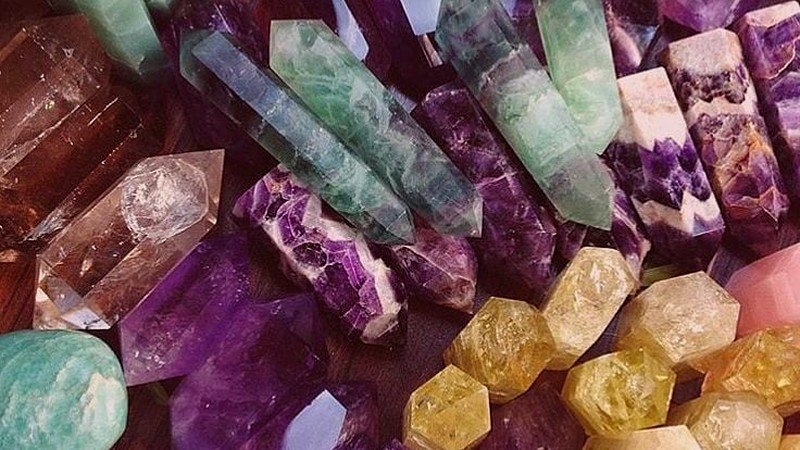
Root chakra gemstones are the red, black and deep brown stones traditionally associated with the base of the spine: red jasper, black tourmaline, hematite, smoky quartz, obsidian, garnet, bloodstone, red agate, onyx, and clear quartz as a general-purpose companion.
They are chosen mainly by colour and by the qualities the root centre is said to govern, which are stability, safety and the sense of having something solid underneath you.
This guide covers what the root chakra represents, what grounding actually means in practice, all ten stones with their traditional associations and their practical care requirements, and a simple root chakra meditation.
Stated clearly at the outset: chakras and crystal correspondences belong to spiritual tradition. They are not anatomical structures or medical treatments, and no stone treats any condition.
What Is the Root Chakra?
The root chakra, Muladhara in Sanskrit, is described in yogic tradition as the first of the seven energy centres, located at the base of the spine.
Its traditional attributes:
- Colour: red
- Element: earth, prithvi
- Seed sound: LAM
- Petals: four
- Position: base of the spine
The name itself combines root and support, and the tradition treats it as the foundation of the whole system. The teaching is that the centres above it do not settle while the base is unsteady, which is why chakra practice conventionally begins here.
If you are new to the wider system, our guide to clearing and balancing the energy centres covers all seven in sequence.
Root Chakra Meaning
The root chakra is associated with the most basic human questions: am I safe, do I have enough, do I belong here.
Its themes cover:
- physical safety and shelter
- money and material security
- the body itself
- family and belonging
- the capacity to rest
Traditionally, when the root feels unsettled, people describe restlessness, difficulty relaxing even when tired, preoccupation with security, or a sense of never quite landing anywhere.
These are traditional associations offered as a vocabulary for self-reflection. They are not symptoms, and they do not indicate any medical or psychological condition. Persistent anxiety or exhaustion deserves a doctor rather than a stone.
What Does Grounding Mean in Chakra Practice?
Grounding is one of those words used constantly and defined rarely.
In chakra practice it means returning attention to the body and the present moment, rather than remaining in thought, planning or worry. The imagery is drawn from the earth element: weight, contact, solidity.
In ordinary terms it looks like this: after a grounding practice, you notice your feet on the floor, your breathing slows, and the mental clatter quietens slightly. Nothing dramatic happens. That is what grounding is.
Practices traditionally associated with it are physical rather than contemplative. Walking, standing barefoot on the ground, handling soil, cooking, eating something warm, and any routine that repeats reliably.
Stones fit into this as reminders and focus objects. Holding something dense and cool gives attention somewhere to go, which is a modest and genuine function.
10 Common Root Chakra Stones
1. Red Jasper
Traditional association: steadiness, endurance, quiet persistence.
Red jasper is an opaque variety of microcrystalline quartz, typically brick to brownish red. It is durable, inexpensive and widely available, which makes it the usual first root chakra stone.
Practitioners tend to reach for it during long demanding periods rather than acute ones. It is the stone of keeping going.
2. Black Tourmaline
Traditional association: grounding and boundaries.
Black tourmaline, known mineralogically as schorl, is the most widely used protective and grounding stone in modern practice. Matte black and reasonably hard, it is commonly kept near an entrance, on a desk, or carried in a pocket.
Practical note: raw black tourmaline is brittle and sheds small fragments. Choose a tumbled piece for carrying, or for anywhere near children and pets.
3. Hematite
Traditional association: weight, grounding, returning to the body.
Hematite is an iron oxide with a metallic grey sheen and it is noticeably heavy for its size. Practitioners treat that weight as the point, and it is the usual recommendation for someone feeling scattered or over-stimulated.
Care note: hematite should not be soaked, since it can rust and lose its surface. Cleanse it with smoke, sound or dry methods.
4. Smoky Quartz
Traditional association: releasing what feels heavy, grounding through transition.
Smoky quartz is a brown to grey variety of quartz, durable and comfortable for daily wear. It sits between black tourmaline and clear quartz in character, grounding without the visual heaviness of the darker stones.
It is often chosen for putting something down rather than defending against something ongoing. Prolonged strong sunlight can fade the colour, so charge it in moonlight or brief early sun.
5. Obsidian
Traditional association: deflection and honest self-examination.
Obsidian is volcanic glass rather than a crystal in the strict mineralogical sense. It takes a high polish, and its reflective quality shapes how it is used: practitioners describe it as showing you what you would rather not look at.
Safety note: obsidian fractures with extremely sharp edges. Handle raw pieces carefully and keep broken fragments away from children.
Teachers often suggest it is not the first stone to give a beginner, since its reputation within the tradition is bracing rather than soothing.
6. Garnet
Traditional association: vitality, commitment, warmth.
Garnet is not a single mineral but a group of related silicates, most familiar in deep red. It is harder and more gem-like than most stones on this list, which is why it appears in jewellery more often than in pouches.
Within the tradition it is associated with energy and follow-through rather than with settling, making it the most active of the root stones.
7. Bloodstone
Traditional association: courage, endurance, steadying under pressure.
Bloodstone, also called heliotrope, is a dark green chalcedony marked with red inclusions. The name and the colouring have given it a long-standing association with vitality across several traditions.
It is a common choice for people facing something demanding over a sustained period rather than a single difficult day.
8. Red Agate
Traditional association: stability with warmth, gentle grounding.
Agate is a banded form of chalcedony, and red agate is often used where red jasper feels too heavy. It tends to be somewhat translucent, with visible banding.
Buying note worth knowing: a large proportion of brightly coloured agate on the market is dyed. That does not make it unusable, but a reputable seller will tell you plainly whether a stone is natural or dyed.
9. Onyx
Traditional association: steadiness, self-discipline, holding a line.
Onyx is another banded chalcedony, most commonly sold in solid black. Practitioners associate it with discipline and composure, and it is a popular bracelet stone for that reason.
The same buying note applies more strongly here. Most black onyx on the market is dyed agate rather than naturally solid black, which is a long-established trade practice rather than a deception, but it is worth knowing what you are buying.
10. Clear Quartz
Traditional association: clarity, and reinforcing whatever it is paired with.
Clear quartz is not a root chakra stone by colour. It appears here because it is the general-purpose companion of crystal practice, used alongside the darker stones to reinforce the intention behind them.
It is durable, easy to identify and inexpensive, which makes it a sensible first purchase for anyone starting out.
How to Choose a Root Chakra Stone
Two questions narrow it quickly.
What kind of grounding do you want? Feeling scattered points to hematite. A long demanding stretch points to red jasper or bloodstone. Wanting boundaries points to black tourmaline. Putting something down points to smoky quartz.
Which one do you actually respond to? If buying in person, handle several and notice which you keep returning to. Weight and texture matter more than a recommended list.
Practical checks when buying:
- ask whether a stone is natural, dyed or reconstituted, and expect a straight answer
- perfectly uniform vivid colour across an inexpensive set usually means dye
- tumbled and polished pieces are safer for daily carry than raw ones
- buy two or three you will use rather than a set you will store
Price is not a measure of spiritual value. A small piece of red jasper carried daily does more in practice than an expensive cluster on a shelf.
How to Use Stones in Meditation
A ten-minute practice:
- Sit comfortably and hold one stone in your palm, or place it on the floor between your feet.
- Breathe slowly for two minutes, attention on its weight and temperature.
- Bring attention to the base of the spine and your contact with the seat.
- Hold the quality you are practising: solid, steady, here.
- Sit quietly for the remaining minutes, returning to the stone when attention drifts.
- Finish by feeling both feet on the floor.
Working with one stone for several weeks teaches more than rotating through a collection. The familiarity is part of what makes the object useful.
Wearing Root Chakra Crystals
Wearing keeps the reminder with you, which is the main practical advantage over keeping stones at home.
- Pocket stone: a tumbled piece you touch when you notice tension rising. The simplest option.
- Bracelet: always visible, which makes it the most effective reminder.
- Pendant: a single stone, though root stones are traditionally worn lower on the body where practical.
- At the desk: black tourmaline or hematite where you will see it during the working day.
Take pieces off before bathing, swimming and heavy physical work, and keep water away from hematite entirely.
Chakra Bracelets
A seven-stone chakra bracelet includes a root stone as the first bead, usually red jasper or black onyx, running through the colour sequence to the crown.
Wearing the full set rather than a single stone suits people who want the whole system present rather than one centre emphasised. Many people wear both: a seven-stone piece for the sequence and a single root stone when grounding is what they actually need that week.
Our Seven Chakra Bracelet uses 8mm stones in the traditional colour order and is prepared and energized before dispatch.
How to Cleanse the Stones
Cleansing is the traditional practice of clearing a stone before setting a fresh intention. Grounding stones are traditionally described as absorbing, so practitioners tend to cleanse them more often than others.
Safe methods:
- smoke from incense, dhoop, camphor or sage
- sound from a bell, ghanti or singing bowl
- resting smaller stones on a larger piece of selenite or clear quartz overnight
- dry salt placed beside, not in contact with, the stones
- earth contact for a few hours, which suits root stones particularly well
Water cautions that matter here: avoid water for hematite, which rusts, and for elastic-strung bracelets, since it degrades the cord. Red jasper, smoky quartz, garnet and clear quartz tolerate a brief rinse.
Monthly is a reasonable rhythm. The full method, including bracelet-specific guidance, is in our guide to caring for crystal bracelets.
How to Recharge the Stones
Recharging restates the purpose after clearing.
- Earth contact. The most fitting method for root stones. Rest them on soil or in a plant pot for a few hours.
- Moonlight. Overnight on a windowsill, traditionally on the full moon. Our full moon charging ritual sets out the sequence.
- Brief morning sunlight. An hour at most, and not for smoky quartz, which fades.
- Spoken intention. Holding the stone and naming clearly what you are working on.
The ritual works as punctuation, marking the close of one period and the start of another.
Root Chakra Meditation
A complete practice, about twelve minutes, with or without a stone.
- Settle, two minutes. Sit with both feet flat on the floor. Let the body arrive.
- Weight, three minutes. Bring attention to every point where your body meets the seat and the floor. Notice the weight rather than adjusting it.
- Breath, three minutes. Breathe naturally with the exhale slightly longer than the inhale. Let each exhale settle you a little further down.
- Base of the spine, three minutes. Rest attention there. If visualization helps, picture a deep red, or imagine roots extending downward. If it does not, simply keep attention on the physical sensation.
- Close, one minute. Feel both feet again, then stand slowly.
Do this daily for two weeks before adding the other centres. Traditional sequencing begins here for good reason, and most people find the upper centres easier to work with once the base is settled.
Frequently Asked Questions
What are the best root chakra gemstones?
The most widely used are red jasper, black tourmaline, hematite, smoky quartz, obsidian, garnet, bloodstone, red agate and onyx, with clear quartz as a general-purpose companion. Red jasper and black tourmaline are the usual starting points, being durable, affordable and easy to identify.
What crystal is best for grounding?
Hematite is the usual recommendation when someone feels scattered, because its weight gives attention something physical to rest on. Black tourmaline is the broader choice for daily grounding and boundaries. Both are traditional associations within crystal practice rather than demonstrated effects.
How do I use root chakra stones?
Hold one during a short daily meditation with attention on the base of the spine, carry a tumbled piece in a pocket, wear a bracelet where you will see it, or keep a stone at your desk. Working with one stone for several weeks teaches more than rotating through several.
What colour is the root chakra?
Red, with black and deep brown stones also traditionally used. The element is earth, the seed sound is LAM, and the centre is located at the base of the spine. The rainbow colour scheme itself is a modern convention rather than a classical one.
How do I cleanse root chakra stones?
Use smoke, sound, a rest on selenite overnight, dry salt placed nearby, or earth contact, which suits grounding stones particularly well. Avoid water for hematite, which rusts, and for elastic-strung bracelets. Monthly is a reasonable rhythm, plus after a difficult stretch.
Can root chakra stones fix anxiety?
No. Chakra and crystal associations belong to spiritual tradition and are not medical or psychological treatments. Persistent anxiety deserves a qualified doctor or therapist. A stone can support a grounding practice and act as a reminder to pause, which is a genuine but modest function.
Which root chakra stone should a beginner start with?
Red jasper or black tourmaline. Both are durable, inexpensive, widely available and hard to confuse with anything else, which matters when you cannot yet assess what you are buying. Add clear quartz as a general-purpose companion if you want a second stone.
Bringing It Together
Root chakra gemstones are useful in a specific and limited way: they give attention something physical to return to when the mind will not settle. Weight in the hand, cool stone against skin, a visible object that reminds you what you decided this week is for.
Choose one or two that match what you actually need, keep them where you will use them, take proper care of them, and pair them with a short daily practice rather than expecting them to work alone.
At The Golden Lotus, crystal work sits inside a wider practice of awareness and energy discipline rather than standing on its own. If you would like guided support rather than working alone, our chakra balancing consultation is a considered place to begin.
Have Questions About This Practice?
Whether you want to learn Reiki, explore Mesmerism, or book a 1-on-1 private energy alignment session, we welcome your questions.