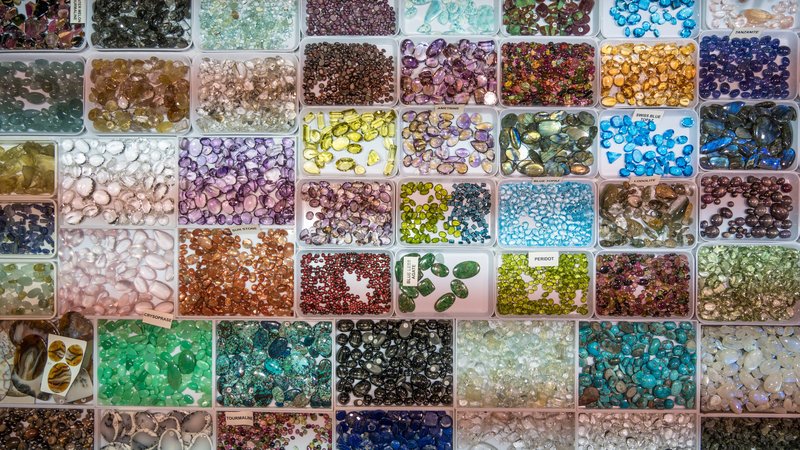
Using crystals to balance chakras means selecting stones matched to each energy centre, usually by colour, then working with them during a focused meditation while attention moves from the base of the spine to the crown.
A complete beginner session takes twenty to thirty minutes: settle, place or hold your stones, move through each centre for a few breaths, and finish by grounding.
This guide gives you the full method step by step, the stone correspondences for all seven centres, practical guidance on placing crystals on the body, and how long and how often to practise.
One thing to be clear about first. Chakras and crystal correspondences belong to spiritual tradition. They are not anatomical structures, crystals are not medical devices, and nothing here treats any condition. What this practice offers is a structured way to hold attention, which is worth doing on its own terms.
How Are Crystals Used With Chakras?
The chakra system comes from Indian yogic and tantric traditions, describing centres of subtle energy along the line of the spine. Crystal correspondences came later, largely through twentieth-century Western practice, matching stones to centres primarily by colour.
Knowing that history is useful, because it explains why different sources recommend different stones for the same chakra. There is no single authoritative list, and disagreement between books usually reflects different lineages rather than one being wrong.
In practice, crystals are used with chakras in four ways:
- Held in the hand during meditation, one stone at a time
- Placed on the body at the corresponding position while lying down
- Arranged around you rather than on you, for comfort
- Worn, usually as a seven-stone bracelet, as a tactile guide through the sequence
The stone’s function throughout is to give attention somewhere to rest. That is the honest description, and experienced practitioners generally put it the same way.
Why that matters practically: it tells you what to optimise for. A stone you find pleasant to hold, that is a comfortable weight and temperature, and that you can locate without hunting through a drawer, will serve you better than a rarer or more expensive one. The qualities that make a stone useful in practice are ordinary physical ones.
It also tells you what not to worry about. Whether your red jasper is a particularly fine specimen makes no difference to a practice built on attention, and neither does whether you own every stone on a recommended list.
For the wider practice of working with the centres themselves, with or without stones, our guide to clearing and balancing the energy centres covers the routines.
Seven Chakras and Common Crystal Associations
| Chakra | Colour | Common Crystals | Traditional Association |
|---|---|---|---|
| Root (Muladhara) | Red, black | Red jasper, black tourmaline, hematite, smoky quartz | Safety, grounding, stability |
| Sacral (Svadhisthana) | Orange | Carnelian, orange calcite, sunstone | Creativity, emotion, enjoyment |
| Solar Plexus (Manipura) | Yellow | Citrine, tiger’s eye, yellow jasper | Confidence, willpower, decisions |
| Heart (Anahata) | Green, pink | Green aventurine, rose quartz, jade | Compassion, connection, forgiveness |
| Throat (Vishuddha) | Blue | Blue lace agate, sodalite, amazonite | Expression, honesty, voice |
| Third Eye (Ajna) | Indigo | Amethyst, lapis lazuli, fluorite | Clarity, insight, perception |
| Crown (Sahasrara) | Violet, white, clear | Clear quartz, amethyst, selenite | Awareness, stillness, perspective |
You do not need all seven to begin. Two or three covering the themes most alive for you right now is a better start than a full set you use once.
Root Chakra
Position: base of the spine. Stones: red jasper, black tourmaline, hematite, smoky quartz.
The root is where practice conventionally begins, because the tradition holds that the centres above it do not settle while the base is unsteady.
In practice, place the stone on the floor between your feet, hold it in your hand, or rest it at the base of the spine while lying down. Attend to weight and contact with the ground rather than to imagery.
Spend extra time here for the first week or two of any chakra practice. It is the least glamorous centre and the one that makes the rest work.
A note on why this sequencing exists. Practitioners commonly report that focusing on the upper centres while feeling unsettled produces a light, scattered quality rather than clarity. Beginning at the base is the traditional remedy, and whether or not you accept the underlying framework, starting a meditation by attending to physical weight and contact is sound practice for entirely ordinary reasons.
Sacral Chakra
Position: below the navel. Stones: carnelian, orange calcite, sunstone.
Associated with creativity, emotion and enjoyment. The element is water, so the quality to hold is movement rather than holding.
Let the breath soften here. This centre responds better to ease than to effort, and forcing concentration tends to be counterproductive.
Solar Plexus Chakra
Position: above the navel. Stones: citrine, tiger’s eye, yellow jasper.
Associated with confidence, will and decision-making. Notice the natural expansion of the abdomen with each inhale, fuller than usual without forcing.
The traditional aim here is warmth rather than heat. If you notice tension gathering, soften the breath rather than pushing.
A buying note: most deep amber citrine sold commercially is heat-treated amethyst rather than natural citrine, which is generally paler. Worth knowing, though neither is more valid for practice.
Heart Chakra
Position: centre of the chest. Stones: green aventurine, rose quartz, jade.
Associated with compassion, connection and forgiveness, directed outward and inward. Green stones are traditionally used for connection to others, rose quartz for self-compassion.
Let the breath widen across the chest rather than only rising and falling. A common addition: bring one person to mind whom you feel warmth towards, then extend the same quality to yourself. Most people find the second part noticeably harder, which is information worth noticing.
Throat Chakra
Position: throat. Stones: blue lace agate, sodalite, amazonite.
Associated with expression and honesty. Notice the passage of breath through the throat and let the jaw and tongue release.
This centre responds particularly well to voice. If you are somewhere private, humming for a minute before settling into silence makes a noticeable difference.
Third Eye Chakra
Position: between the eyebrows. Stones: amethyst, lapis lazuli, fluorite.
Associated with clarity and insight. Hold attention lightly here, since straining the eyes upward is the most common beginner error and often produces a headache.
If third eye focus feels unsettling, and it does for some people, shorten your time here and lengthen your time at the root.
Crown Chakra
Position: top of the head. Stones: clear quartz, amethyst, selenite.
Associated with awareness and stillness. There is nothing to do at the crown, and that is the practice. No visualization is required.
Care note if you use selenite: it is soft and water-soluble, so never wash it and keep it out of damp rooms.
Step-by-Step Chakra Crystal Meditation
The complete method, about twenty-five minutes.
1. Choose a quiet place. Somewhere you will not be interrupted, with your phone out of the room. Lying down suits stone placement; sitting suits holding stones and reduces the chance of falling asleep.
2. Select your stones. Either the full seven, or two or three matching what is most relevant right now. Lay them out in order before you begin, so you are not reaching for things mid-practice.
3. Set an intention. Ten seconds is enough. Name what you are practising: steadiness, honesty, ease. This is what separates practice from lying down with rocks on you.
4. Breathe slowly. Two minutes, natural breathing with the exhale slightly longer than the inhale. Let the body arrive before you start moving attention.
5. Focus on one chakra at a time. Begin at the root. Rest attention there for five slow breaths, holding the quality associated with it. Then move upward through sacral, solar plexus, heart, throat, third eye and crown, five breaths at each.
6. Observe sensations without forcing them. Some centres will feel like something, most will not. Both are normal. Do not manufacture a sensation because you expect one, and do not conclude the practice failed because nothing happened.
7. Finish with grounding. Return attention to the base of the spine, then to both feet, for a full minute. Feel the whole body at once before opening your eyes, and get up slowly.
That last step is the one people skip and the one that determines how the rest of your day goes. Ending at the crown leaves many people scattered rather than settled.
Can You Place Crystals Directly on the Body?
Yes, with a few practical considerations that matter more than the spiritual ones.
What works:
- tumbled, polished stones rather than raw ones
- lying on your back on a firm surface, with a cushion under the knees
- smaller stones, since large pieces roll off and become a distraction
- placing stones beside the body rather than on it if balance is awkward
What to be careful about:
- Raw obsidian fractures with sharp edges and should not be placed on skin.
- Raw black tourmaline is brittle and sheds fragments.
- Soft stones such as selenite scratch and flake, so keep them beside you rather than under pressure.
- Malachite is traditionally handled with care and is generally better used polished and briefly.
- Anything sharp or heavy will dominate your attention, which defeats the purpose.
A note on comfort: a body covered in stones tends to make you aware of the stones rather than the practice. Two or three well placed is usually better than seven.
Nothing here should cause discomfort. If a stone is cold, heavy or digging in, move it. There is no benefit to enduring it.
How Long Should You Practise?
For beginners, twenty to thirty minutes covers a full seven-centre session with time to settle and ground.
- Short version: twelve minutes, three breaths per centre, for busy days
- Standard: twenty to thirty minutes
- Single centre: ten minutes on one chakra, which is often more useful than the full sequence
Longer is not better. A distracted forty minutes is worth less than an attentive fifteen, and lying still with stones on you for an hour tends to end in sleep rather than practice.
How Often Should You Cleanse Chakra Stones?
Monthly is a reasonable rhythm, plus after an emotionally heavy period or when someone else has handled them.
Safe methods:
- smoke from incense, dhoop or camphor
- sound from a bell or singing bowl
- resting smaller stones on a larger piece of selenite overnight
- dry salt placed nearby, not in contact
- earth contact for a few hours
Water cautions: never wet selenite, which dissolves. Avoid water for hematite, which rusts, and for porous stones. Keep water away from elastic-strung bracelets entirely.
The full method is in our guide to caring for crystal bracelets and stones.
Chakra Bracelet vs Individual Stones
Both formats suit different uses, and many people keep both.
| Chakra Bracelet | Individual Stones | |
|---|---|---|
| Best for | Daily wear and a constant reminder | Focused meditation on one or more centres |
| During practice | Bead-by-bead as a tactile guide | Placed on the body or held |
| Convenience | Always with you | Needs setting up each time |
| Focus | The full sequence at once | One centre at a time |
| Cost | One purchase covers all seven | Builds up over time |
| Care | Keep dry, store flat | Individual care per stone |
The bead-by-bead method suits beginners well, because the hand has something to do and the sequence becomes physical rather than remembered. Our Seven Chakra Bracelet uses 8mm stones in the traditional colour order for exactly this purpose.
Individual stones suit deeper work on one centre, which is often what people actually need.
Frequently Asked Questions
How do you use crystals to balance chakras?
Select stones matched to each centre, usually by colour, then work through a focused meditation from the base of the spine to the crown. Rest attention at each centre for around five breaths while holding or placing the corresponding stone, and finish by grounding at the root for a full minute.
Which crystals go with which chakra?
Commonly: red jasper or black tourmaline for the root, carnelian for the sacral, citrine or tiger’s eye for the solar plexus, green aventurine or rose quartz for the heart, blue lace agate or sodalite for the throat, amethyst or lapis lazuli for the third eye, and clear quartz or amethyst for the crown.
Can you put crystals directly on your body?
Yes, using tumbled rather than raw stones, lying on a firm surface. Avoid raw obsidian, which has sharp edges, and raw black tourmaline, which is brittle. Two or three well-placed stones work better than seven, since a body covered in stones makes you aware of the stones rather than the practice.
How long should a chakra crystal meditation be?
Twenty to thirty minutes covers a full seven-centre session with time to settle and ground. Twelve minutes works on busy days with three breaths per centre. Ten minutes on a single chakra is often more useful than a rushed full sequence.
Do chakra crystals actually work?
They are a spiritual and reflective practice, not a medical one. No evidence shows that crystals affect the body, and chakras are not anatomical structures. What the practice reliably offers is a structured way to hold attention, which many people find genuinely settling and which needs no further claim.
Which chakra should I start with?
The root, always. Traditional sequencing begins at the base because the centres above it are held to settle more easily from a steady foundation. Many practitioners suggest doubling the time spent at the root for the first week or two of any chakra practice.
How often should I cleanse my chakra stones?
Monthly is reasonable, with additional cleansing after a difficult period or when others have handled them. Use smoke, sound, selenite, dry salt nearby, or earth contact. Avoid water for selenite, hematite and porous stones, and avoid it entirely for elastic-strung bracelets.
Do I need all seven chakra stones?
No. Two or three matching the themes most relevant to you now is a better start than a full set used once. Working with one stone for several weeks teaches considerably more than rotating through a collection, because familiarity is part of what makes the object useful.
Bringing It Together
Using crystals to balance chakras is, in practice, a structured meditation with physical anchors. The stones give attention somewhere to rest and the sequence gives it a route, which is why many people find this easier than open meditation.
Start at the root, spend longer there than feels necessary, use two or three stones rather than seven, do not manufacture sensations you are not having, and always ground at the end.
At The Golden Lotus, chakra and crystal work sit inside a wider practice of awareness and energy discipline. If you would like to be guided through it rather than working alone, our chakra balancing consultation is a considered starting point, and those wanting to study crystal work alongside advanced practice can look at our Reiki Level 3 training.
Have Questions About This Practice?
Whether you want to learn Reiki, explore Mesmerism, or book a 1-on-1 private energy alignment session, we welcome your questions.