
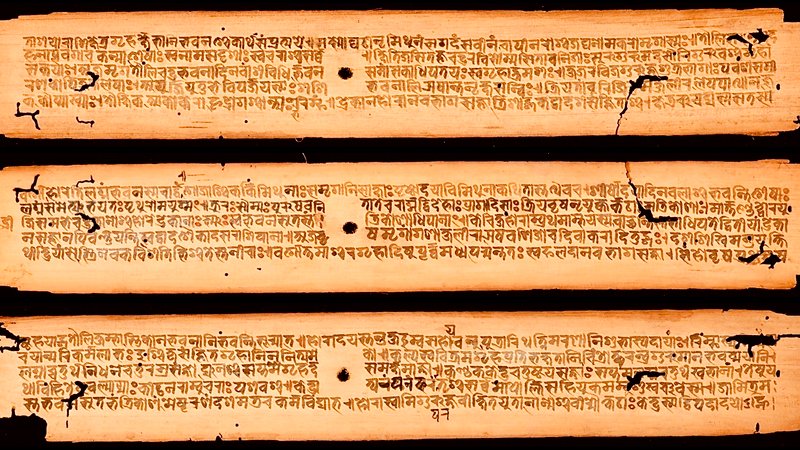
Vedic synastry is the comparison of two birth charts to understand how two people are likely to relate. In Indian practice it is more commonly called kundli matching or gun milan, and it draws on both a scoring system and a broader reading of the two charts together.
Synastry itself is Western terminology. The underlying idea, comparing charts to understand a relationship, exists in both traditions, but the methods differ considerably.
This guide covers what astrologers actually look at, how Ashtakoota scoring works, the difference between compatibility and timing, and why a score should never be treated as a verdict on a relationship.
Stated plainly at the outset: Vedic astrology is a traditional symbolic system with a long scholarly history. It is not an established science, it does not determine outcomes, and no chart comparison removes the choices two people make.
What Is Vedic Synastry?
Vedic synastry means placing two kundlis side by side and examining how the placements in one relate to the placements in the other.
Where Western synastry typically emphasises aspects between the two charts, Vedic practice works somewhat differently. It combines:
- Ashtakoota matching, a point-based system comparing the two Moon positions
- Chart-to-chart analysis, looking at houses, lords, planets and periods across both
- Dosha assessment, checking for particular placements traditionally considered challenging
- Dasha comparison, examining what periods each person is running
The scoring system is the part everyone knows, and it is only one component. A competent astrologer reads both charts fully rather than delivering a number.
If you are new to reading a single chart, the components are covered in our beginner’s guide to interpreting a kundli. The structural differences between the two astrological systems are set out in our comparison of Vedic and Western approaches.
How Relationship Compatibility Is Analysed
The main factors an astrologer examines, at a beginner level.
Lagna. Each person’s ascendant, which sets the house structure of their chart and is traditionally associated with temperament and approach to life. Compatible lagnas are considered a favourable starting point rather than a requirement.
Moon sign. Weighted heavily in Vedic practice, since the Moon is associated with the mind and emotional nature. The Moon positions of both people form the basis of Ashtakoota scoring.
Venus. Shukra, associated with affection, comfort, attraction and how a person expresses love. Its condition in each chart, and its relationship across the two, is central to compatibility work.
Mars. Mangala, associated with energy, drive and conflict. Also the planet behind Mangal dosha, discussed below.
The seventh house. Traditionally the house of marriage and partnership. Its condition and the planets occupying it are examined in both charts.
The seventh lord. The planet ruling whichever sign falls on the seventh house. Its placement and strength carry considerable weight, often more than the house itself.
Nakshatras. The lunar mansion occupied by each person’s Moon, which feeds directly into the matching system.
Planetary aspects. How planets in one chart fall relative to the other person’s placements, examined using the Vedic drishti rules.
Dashas. The planetary periods each person is currently running, which is why timing and compatibility are separate questions.
Dasha comparison deserves a note of its own, since it is frequently skipped in quick readings. Two people may be well matched by every other measure while running periods that pull in different directions, one oriented towards consolidation and the other towards upheaval. Traditionally this is read as a period the relationship passes through rather than a characteristic of the pairing, which is an important distinction. A difficult stretch attributable to a passing period is not the same as a structural incompatibility, and conflating the two leads people to draw permanent conclusions from temporary conditions.
What Is Kundli Matching?
Kundli matching, or kundli milan, is the traditional process of comparing two charts before marriage, still widely practised across India.
In most families the process is scoring-led: an astrologer calculates the Ashtakoota points, checks for specific doshas, and gives an opinion. In more thorough practice, the scoring is a first pass and the substantive work happens in the full chart comparison afterwards.
It is worth naming something honestly here. Kundli matching carries real social weight in many communities, and a low score has ended engagements. A responsible astrologer is aware of that weight and is careful about how findings are communicated, because a number presented as a verdict can do genuine harm to two people who are otherwise well suited.
Ashtakoota Matching Explained
Ashtakoota, also called Guna Milan, compares eight factors derived from the two Moon positions and their nakshatras. Each factor carries a different weight, totalling thirty-six points.
| Koota | Points | Traditionally Associated With |
|---|---|---|
| Varna | 1 | Temperament and general disposition |
| Vashya | 2 | Mutual influence and attraction |
| Tara | 3 | Wellbeing and fortune of the pairing |
| Yoni | 4 | Physical and instinctive compatibility |
| Graha Maitri | 5 | Mental affinity and friendship |
| Gana | 6 | Temperamental type and behaviour |
| Bhakoot | 7 | Overall harmony and prosperity of the union |
| Nadi | 8 | Health, constitution and lineage |
Conventions vary between regions and astrologers, but broadly, higher totals are read as more favourable, and many practitioners treat scores in the upper half of the range as acceptable. Nadi and Bhakoot carry the most weight, which is why difficulties there attract particular attention.
Three things worth understanding about this system:
It is based on the Moon alone. The entire thirty-six points derive from two Moon positions. Everything else in both charts sits outside the score.
Conventions differ. What counts as an acceptable total, and how doshas are treated, varies by region, community and astrologer. There is no single authority.
A score is not a prediction. It is a traditional indicator within a system, not a measurement of how a relationship will go.
Mangal dosha, sometimes called manglik, is assessed separately. It refers to Mars occupying particular houses from the ascendant, and traditions differ on which houses count and on how it is considered resolved. Like the scoring, it is a traditional consideration rather than a determination.
Emotional Compatibility
The Moon does most of the work here, which is why it carries such weight in Vedic practice.
Astrologers look at how the two Moon signs relate, which nakshatras they occupy, and what condition each Moon is in. Graha Maitri and Gana within the scoring system both point at this territory.
What this examines, in ordinary terms: whether two people process feeling in ways the other can recognise, and whether they are likely to feel understood rather than merely accommodated.
It is an indicator, not a description. Two people whose Moons sit awkwardly can understand each other perfectly well with effort and honesty, and two people with a favourable comparison can still fail to talk to each other.
Attraction and Chemistry
Venus and Mars are the usual reference points, with Venus associated with affection and attraction and Mars with drive and intensity.
Astrologers look at where each sits in both charts and how they relate across the two. Yoni koota within the scoring system also addresses this area.
A caution worth stating. Strong indications here are not a measure of a relationship’s durability, and the traditional texts are clear that attraction and long-term compatibility are different questions. Many relationships with obvious chemistry do not last, and this is not a novel observation.
Communication
Mercury, Budha, is associated with speech, reasoning and the way a person explains themselves. The third house is traditionally connected with communication, and the fifth with playfulness and shared creativity.
Astrologers examine how these interact across both charts, looking at whether two people are likely to make sense to each other in ordinary conversation.
This is one of the areas where chart comparison is least deterministic and most useful as a prompt. Knowing that two people process information differently is only helpful if they then talk about it.
Long-Term Partnership
For durability rather than attraction, astrologers look at:
- Saturn. Shani, associated with commitment, endurance and the willingness to stay through difficulty.
- Jupiter. Guru, associated with shared values, ethics and growth in the same direction.
- The seventh house and its lord in both charts, read for what each person brings to partnership.
- The second and eleventh houses, traditionally connected with family life and shared gains.
Saturn’s role is worth emphasising because it is often read negatively. In partnership analysis it is frequently the most useful indicator, since relationships are sustained by endurance rather than by intensity.
Marriage Timing vs Compatibility
These are two different questions and they are constantly conflated.
Compatibility asks how two people are likely to relate. It is read from the comparison of the two charts.
Timing asks when a period favourable to marriage might occur. It is read from dashas and transits in an individual chart.
The practical implication: a strong compatibility reading says nothing about when, and a favourable timing period says nothing about with whom. Someone can be in a period traditionally associated with marriage and have no suitable partner, which surprises people who expected the two to be linked.
Be wary of any astrologer offering specific dated predictions of when you will marry. Traditional interpretation speaks of periods and tendencies. Precise dating of life events goes well beyond what the system supports.
Can a Low Compatibility Score Mean a Relationship Will Fail?
No, and this deserves stating as plainly as possible.
Ashtakoota is a traditional indicator derived from two Moon positions within a symbolic system. It does not measure a relationship, it cannot predict its outcome, and it has no power to determine what two people do.
What actually determines whether a relationship works:
- how two people communicate, particularly during disagreement
- whether they share values and want similar lives
- effort, honesty and willingness to repair after conflict
- circumstances, including family, money, health and work
- whether both people want to be in it
None of that appears in a score.
There is a real cost to treating these numbers as verdicts. Engagements have been ended over Ashtakoota totals between people who would have been well matched, and relationships have been entered on the strength of high scores that plainly were not working. Both are misuses of a traditional tool.
A responsible astrologer treats matching as one input among many, explains what a finding means rather than pronouncing on it, and is explicit that the decision belongs entirely to the two people involved.
Professional Interpretation
Chart comparison is genuinely difficult, more so than reading a single chart, because the factors multiply and frequently contradict each other.
A good astrologer:
- reads both charts fully rather than delivering a score
- explains their reasoning so you can weigh it yourself
- speaks in terms of tendencies rather than certainties
- acknowledges where a reading is unclear
- is clear that the decision is yours
- never predicts divorce, illness or disaster
What should make you leave: a score presented as a verdict, urgency about expensive remedies, certainty about dated future events, or any suggestion that a relationship is doomed.
If that measured approach is what you want, our Vedic astrology consultation is conducted on those terms, alongside our other spiritual services. You can read about our background and approach on our about page first.
Frequently Asked Questions
What is Vedic synastry?
The comparison of two birth charts to understand how two people are likely to relate, known in Indian practice as kundli matching or gun milan. It combines Ashtakoota point scoring based on the two Moon positions with a broader reading of houses, planets, lords and current planetary periods across both charts.
How does kundli matching work?
An astrologer compares the two Moon positions and nakshatras across eight factors called kootas, totalling thirty-six points, then checks for traditionally challenging placements such as Mangal dosha. In thorough practice this is a first pass, with the substantive work done in a full comparison of both charts.
What is a good Ashtakoota score?
Conventions vary by region and astrologer, with many practitioners treating totals in the upper half of the thirty-six point range as favourable. Nadi and Bhakoot carry the most weight. No single authority sets the standard, and a score is a traditional indicator rather than a measurement of anything.
Can a low compatibility score mean a relationship will fail?
No. Ashtakoota derives entirely from two Moon positions within a symbolic system. It does not measure a relationship or predict its outcome. What determines whether a relationship works is communication, shared values, effort, circumstances and whether both people want to be in it, none of which appears in a score.
What does Vedic astrology look at for compatibility?
Both ascendants, both Moon signs and nakshatras, Venus and Mars for affection and drive, the seventh house and its lord for partnership, Mercury for communication, Saturn and Jupiter for endurance and shared values, planetary aspects across the charts, and the periods each person is currently running.
Is Vedic compatibility the same as Western synastry?
The underlying idea is shared, but the methods differ. Western synastry emphasises aspects between the two charts and uses the tropical zodiac. Vedic practice uses the sidereal zodiac, weights the Moon heavily, includes the nakshatra-based Ashtakoota scoring system, and considers dasha periods.
What is Mangal dosha?
A traditional consideration where Mars occupies particular houses from the ascendant, associated in some traditions with difficulty in marriage. Which houses count, and how it is regarded as resolved, varies considerably between regions and astrologers. It is a traditional consideration rather than a determination of anything.
Does astrology decide whether a marriage will work?
No. Vedic astrology is a traditional symbolic system, not an established science, and it does not remove human choice or guarantee outcomes. Chart comparison can offer a vocabulary for discussing how two people differ. The relationship itself depends on what those two people actually do.
Bringing It Together
Vedic synastry is a traditional method for looking at how two people might relate, combining a scoring system with a fuller comparison of both charts. Used well, it offers a language for discussing differences that two people might otherwise struggle to name.
Used as a verdict, it becomes something that ends relationships on the basis of a number derived from two Moon positions. That is worth resisting, whatever weight the tradition carries in your family.
If you want a chart comparison, look for an astrologer who reads both charts rather than quoting a score, explains their reasoning, and is explicit that the decision is yours. At The Golden Lotus, our astrology consultation is conducted on exactly those terms, and questions beforehand are always welcome.

Have Questions About This Practice?
Whether you want to learn Reiki, explore Mesmerism, or book a 1-on-1 private energy alignment session, we welcome your questions.