
If you are exploring energy healing, two names appear again and again: Reiki and Pranic Healing. Both work with the idea of a universal life force. Both are used as complementary practices to support relaxation, emotional balance and spiritual awareness. And both can be learned by ordinary people, not only “gifted” healers.
But they are not the same system. They come from different traditions, use different techniques and feel quite different in a session. This guide explains the real Reiki and Pranic Healing differences so you can decide which practice suits you—or whether it makes sense to learn both.
What Is Reiki?
Reiki is a Japanese energy practice founded by Mikao Usui in the early 1920s. The word joins two Japanese characters: rei, often translated as “universal” or “spiritual,” and ki, meaning life energy. Practitioners describe Reiki as energy that flows through them rather than from them, which is why a Reiki practitioner is often called a channel.
Key features of Reiki:
- Attunement: Students receive an attunement (also called initiation or reiju) from a Reiki Master, which is believed to open them to the flow of Reiki energy.
- Gentle hand positions: The practitioner places the hands lightly on, or just above, the body in a series of positions.
- Symbols: From Level 2 onward, practitioners use Reiki symbols to focus intention.
- Simplicity: The practitioner stays relaxed and present while the energy is believed to go where it is most needed.
What Is Pranic Healing?
Pranic Healing is a no-touch energy healing system developed by Grand Master Choa Kok Sui and introduced through his 1987 book Miracles Through Pranic Healing. Prana is a Sanskrit word for life force. The system organises ideas found in yogic and other Eastern traditions into precise, repeatable techniques.
Key features of Pranic Healing:
- No touch: The healer works on the energy body (aura) without physical contact.
- Scan, cleanse, energise: The practitioner scans the aura with the hands, “sweeps” away congested or depleted energy, and then projects fresh prana into specific areas.
- Protocols: Specific step-by-step sequences are taught for specific concerns.
- Learned, not attuned: Students learn through structured classes; there is no attunement.

Reiki vs Pranic Healing: Side-by-Side Comparison
| Aspect | Reiki | Pranic Healing |
|---|---|---|
| Origin |
Japan, Mikao Usui, 1920s | Grand Master Choa Kok Sui, 1980s |
| Core idea | Universal life energy flows through the practitioner | Prana is drawn in and actively directed by the healer |
| Touch | Light touch or hands just above the body | No touch |
| How you learn | Attunements from a Reiki Master, in levels | Classroom training in techniques, no attunement |
| Session style | Sequence of hand positions; intuitive and meditative | Scan → cleanse → energise; protocol-based |
| Cleansing step | Not a separate formal step in most traditional styles | A central, deliberate step |
| Symbols | Used from Level 2 | Not used in the same way |
| Self-practice | Daily self-Reiki | Self-cleansing and meditation practices |
| Distance work | Taught at Level 2 using the distance symbol | Also practised at a distance |
Where the Two Practices Overlap
Despite their differences, Reiki and Pranic Healing share important common ground:
- Both see a person as more than a physical body, with an energy dimension that responds to intention and attention.
- Both are non-invasive and usually experienced as calming.
- Both can be practised on yourself, on others and at a distance.
- Both emphasise the practitioner’s own daily practice and inner balance.
Benefits People Commonly Report
People who receive or practise either system often describe deep relaxation, a quieter mind, clearer awareness of their emotions, and a stronger sense of connection. Practitioners also value having a simple daily routine for unwinding and reflection.
These experiences are personal and vary from person to person. Neither Reiki nor Pranic Healing should be presented as a cure for any physical or mental-health condition.
Reiki or Pranic Healing—Which Is Better?
Neither is universally better. The right choice depends on how you like to learn and practise.
Reiki may suit you if you:
- prefer a gentle, meditative, intuitive approach;
- are drawn to a lineage-based attunement;
- want a practice that is easy to use every day for self-care;
- are comfortable with light touch or hands-above work.
Pranic Healing may suit you if you:
- enjoy structured, step-by-step methods;
- prefer strictly no-touch work;
- like detailed protocols and technical learning.
A simple way to decide: ask yourself whether you prefer to allow or to direct. Reiki emphasises allowing energy to flow; Pranic Healing emphasises actively directing it.
Reiki vs Prana Healing: Can You Practise Both?
Yes—many people do. The sensible approach is to learn one system thoroughly, practise it consistently for some months, and then add the second. Mixing techniques from both in one session before you understand each well can confuse both you and the receiver. Respect each system’s own guidelines, especially around cleansing, hygiene and closing a session.
What to Expect in a Session
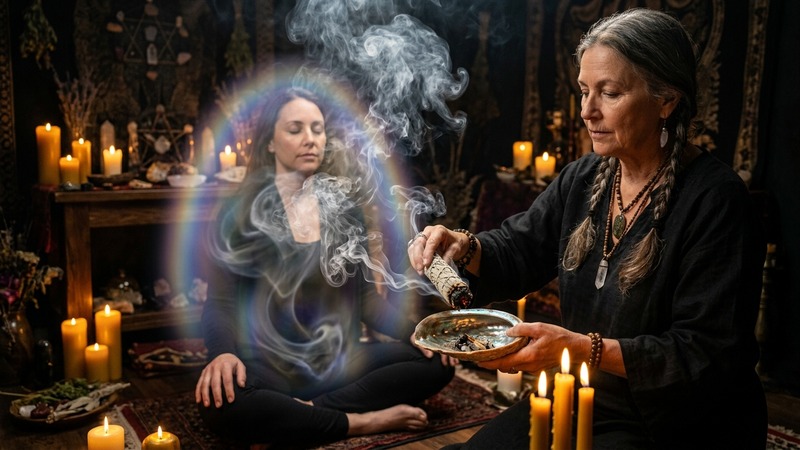
In a Reiki session, you usually lie down fully clothed while the practitioner moves through hand positions from head to feet. Sessions often last 45–60 minutes. Many people notice warmth, tingling, heaviness or simply deep calm; some notice nothing in particular, which is also normal.
In a Pranic Healing session, you typically sit or stand. The healer scans your energy field, makes sweeping motions to cleanse it, and then energises specific areas. Sessions are often shorter and more technique-focused.
From Hardik’s practice: In our practice at The Golden Lotus, many students initially seek out Reiki because of its deeply soothing, non-intrusive nature. In a first session, clients often report a profound sense of warmth and the sensation of mental chatter gently dissolving into stillness.
Learn Reiki at The Golden Lotus
If the gentle, attunement-based path of Reiki feels right for you, begin with the Reiki Level 1 & 2 Course. Continue with the Reiki Level 3 Course, which covers Reiki symbols and crystals, and train as a teacher in the Reiki Master Teacher Course (Level 4–5). Curious how Reiki compares with mesmerism and hypnotism? Explore the Combined Spiritual Master Course. If you would like to experience energy work first, book an Online Energy Healing Session.
Frequently Asked Questions
Is Pranic Healing the same as Reiki?
No. Both are energy-based practices, but Reiki is a Japanese system based on attunement and gentle hand positions, while Pranic Healing is a no-touch system built on scanning, cleansing and energising.
Does Reiki involve touching?
Reiki can be done with light touch or with the hands slightly above the body. A good practitioner always asks before touching and adjusts to your comfort.
Which is easier to learn?
Many beginners find Reiki easier to start with, because Level 1 focuses on simple hand positions and self-practice. Pranic Healing asks you to learn more techniques from the beginning.
Can Reiki or Pranic Healing replace medical treatment?
No. Both are complementary practices and should be used alongside, not instead of, professional medical and mental-health care.
Disclaimer: Reiki, energy healing and related spiritual practices are complementary practices. They are not a substitute for medical diagnosis, treatment or mental-health care. If you have a physical or mental-health condition, continue working with a qualified professional and consult them before starting any new practice.
Have Questions About This Practice?
Whether you want to learn Reiki, explore Mesmerism, or book a 1-on-1 private energy alignment session, we welcome your questions.