Learning Reiki follows a defined path: you begin at Level 1 with self-practice, move to Level 2 for symbols and distance work, then to Level 3 for Master-level personal practice, and finally to teacher training if you want to attune others. Each stage involves an attunement given by a teacher, and each is followed by a period of daily practice before moving on.
Anyone can learn it. There is no requirement for prior experience, particular beliefs, or any special sensitivity.
This roadmap covers what happens at each level, how long the journey typically takes, what Reiki certification does and does not mean, how to choose a teacher, and how to tell when you are ready for the next stage.
What Is Reiki?
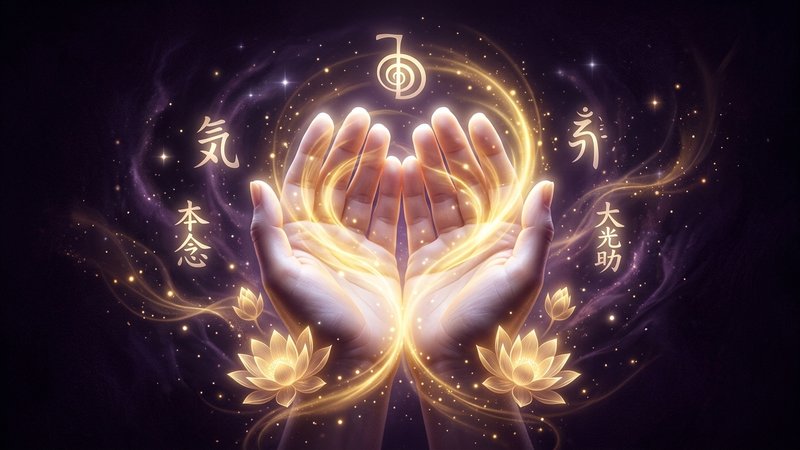
Reiki is a Japanese spiritual practice developed by Mikao Usui in the early twentieth century, in which a practitioner places their hands on or near the body with the intention of supporting relaxation and wellbeing.
The word combines rei, often rendered as universal or sacred, and ki, meaning life energy. Practitioners describe themselves as a channel rather than a source, which is why Reiki is generally taught as something you allow rather than something you do forcefully.
In practical terms, a session involves lying clothed while a practitioner works through a sequence of hand positions. Most people describe it as deeply restful.
What it is not: a medical treatment. Reiki does not cure disease, and no responsible teacher or practitioner will claim it does. It is a spiritual and relaxation practice that sits alongside proper healthcare. Our beginner’s introduction to Usui Reiki covers the history and the foundations in more depth.
Can Anyone Learn Reiki?
Yes, and this is worth saying clearly because many people assume otherwise.
You do not need:
- prior spiritual or healing experience
- a particular religion, or any religion
- unusual sensitivity or intuitive ability
- a background in yoga, meditation or anatomy
- to be a certain age, beyond what a particular school sets
What actually helps:
- willingness to practise daily, which is the real requirement
- patience with slow progress
- a teacher you can ask questions of
- a reasonably open and honest attitude towards your own experience
The most common reason people stop is not incapacity. It is that they took the course and never established daily practice.
Can Reiki Be Self-Taught?
You can read about Reiki freely, and you should. Books, articles and videos will give you the history, the hand positions and the precepts.
What cannot be self-taught, in traditional understanding, is the attunement. Reiki is a transmitted practice. The connection is passed from teacher to student in a ceremony, and that transmission is what the tradition regards as the beginning of practice.
This is not gatekeeping for its own sake. It is what distinguishes a lineage-based practice from a technique. A teacher also gives you something no book can: correction, answers to questions specific to your experience, and someone to ask when a session goes in an unexpected direction.
Some modern schools offer self-attunement methods. These exist, they are a real position within the field, and they sit outside traditional practice. If lineage matters to you, learn from a teacher.
Why Attunement and Teacher Guidance Matter
An attunement is a short ceremony, usually quiet and unremarkable to watch, in which the teacher makes a series of specific gestures while the student sits with eyes closed.
Traditionally it is understood to open the student’s connection to Reiki at that level. Some students report warmth, colour, emotion or nothing at all. Feeling nothing does not mean it did not work, which is worth knowing in advance.
Attunement is usually followed by a settling period, often described as around three weeks, during which students are encouraged to practise daily and notice what changes. Our detailed account of what happens during attunement covers the ceremony, the settling period and what students commonly experience.
Reiki Level 1
Japanese name: Shoden, meaning first teachings.
Focus: yourself.
Level 1 establishes the foundation. Typical content:
- the first attunement
- the history of Usui Reiki and its lineage
- hand positions for self-treatment
- the Gokai, the five Reiki precepts
- treating family and friends informally
- establishing a daily self-practice
Level 1 is usually taught over one or two days, with self-practice expected daily afterwards. Most teachers ask for at least three weeks of consistent practice before Level 2.
The most common mistake at this stage is rushing. Level 1 is where sensitivity develops, and it develops through repetition rather than through new material.
Reiki Level 2
Japanese name: Okuden, meaning inner teachings.
Focus: others, and distance.
Level 2 expands the practice considerably:
- the second attunement
- the three traditional symbols and how they are used
- distance practice, and the etiquette of consent that goes with it
- more structured treatment of others
- deeper work with the precepts
This is the level at which many practitioners begin working with people outside their immediate circle. Some schools teach Levels 1 and 2 together in one course, which works well when the practice period between them is respected rather than skipped. Our Level 1 and 2 training is structured that way.
Reiki Level 3
Japanese name: Shinpiden, meaning mystery teachings, in traditions that use it.
Focus: depth of personal practice.
Level 3 is where lineages diverge most, so check any course description carefully.
Commonly included:
- the Master attunement
- the Master symbol, Dai Ko Myo
- extended meditation and personal practice
- in some schools, crystal work and advanced techniques
- a shift in emphasis from doing towards presence
An important distinction: receiving Master-level attunement is not the same as being qualified to teach. Many schools, including ours, treat these as separate stages. Our Level 3 course covers Master symbol work and crystals within personal practice, without teacher training.
Reiki Master and Teacher Levels
Focus: teaching, and carrying the lineage.
Teacher training covers what a Master practitioner does not automatically know:
- how to perform attunements for students
- how to structure and deliver a course
- ethics, boundaries and student responsibility
- lineage, and your responsibility for what you pass on
- practical matters: consent, record keeping, how to handle difficult sessions
This stage deserves genuine consideration rather than momentum. Teaching Reiki means taking responsibility for other people’s practice, and plenty of excellent practitioners have no wish to do it. There is no hierarchy of worth here. Our Master and Teacher training is intended for those who have practised at Master level for a meaningful period and want to teach.
Reiki Level Comparison Table
| Level | Main Focus | Typical Practices | Symbols | Suitable For |
|---|---|---|---|---|
| Level 1 (Shoden) | Self-practice | Daily self-treatment, hand positions, precepts | None in most lineages | Complete beginners |
| Level 2 (Okuden) | Treating others, distance | Structured sessions, distance practice | Three traditional symbols | Those with settled Level 1 practice |
| Level 3 (Shinpiden) | Depth of personal practice | Extended meditation, Master symbol work | Master symbol | Committed practitioners, often after a year or more |
| Master and Teacher | Teaching others | Performing attunements, course delivery, mentoring | All, including attunement practice | Those intending to teach |
Structures vary between lineages. Some schools split Level 3 into practitioner and teacher stages, others combine them, and Japanese traditional schools may organise things differently again. The table reflects the common Western structure, which is what most course descriptions follow.
Online vs In-Person Reiki Training
Both are legitimate, and the choice depends on circumstances more than on quality.
In-person: direct attunement in the room, immediate correction of hand positions, practice on real people, and the atmosphere of a group. Best if you have a good teacher within reach.
Online: accessible regardless of location, often more flexible in pacing, and attunement is performed at distance, which is consistent with how distance practice works within Reiki itself. Best if geography, schedule or health make travel difficult.
What matters far more than format:
- a teacher who answers questions properly before you pay
- a clear, stated lineage
- ongoing access after the course rather than a one-off transaction
- realistic claims about what Reiki does
- an expectation of practice rather than a certificate on completion
A poor in-person course is worse than a good online one. Judge the teacher, not the medium.
What to Look For in a Reiki Teacher
Ask these before enrolling anywhere:
- What is your lineage? A teacher should be able to name their teacher and trace the line back towards Usui.
- What exactly does the course cover? Content varies enormously between schools.
- What support is there afterwards? Practice questions arrive weeks later, not during the course.
- How many students per course? Smaller groups mean more attention.
- What do you expect from students between levels? A teacher with no expectations is a warning sign.
- What do you say Reiki can do? Any claim to cure disease, replace medical treatment, or guarantee outcomes should end the conversation.
Two further warning signs: pressure to progress quickly through levels, and discouragement from asking questions. Good teachers welcome scrutiny.
What Reiki Certification Actually Means
This needs stating plainly, because it is widely misunderstood.
Reiki is not a regulated profession in most countries. There is no single governing body, no universal syllabus, and no legally recognised qualification. A Reiki certificate records that a particular teacher attuned you at a particular level. Its value depends entirely on that teacher.
What a certificate does mean:
- you received attunement in a lineage that can be traced
- you completed a course with defined content
- you have a documented record of your training
What it does not mean:
- any licence to treat medical conditions
- a nationally recognised professional qualification
- proof of competence, which comes only from practice
If you intend to work with the public, look separately into local regulations, professional insurance and any registration bodies operating in your country. Those requirements sit outside Reiki training itself.
How Long Does Reiki Training Take?
The courses are short. The practice is not.
- Level 1: typically one to two days of teaching
- Practice before Level 2: commonly three weeks minimum, and many teachers suggest longer
- Level 2: typically one to two days
- Practice before Level 3: commonly six months to a year
- Level 3: one to two days, sometimes longer
- Practice before teacher training: usually at least a year at Master level
Beginner to teacher therefore takes a realistic two to three years for most people, and often longer. Anyone offering the full path in a weekend is selling certificates rather than teaching a practice.
Daily Self-Practice
This is the part that actually determines whether you become a practitioner.
A workable daily structure, twenty to thirty minutes:
- Sit quietly for two minutes and settle.
- Recite or reflect on the Gokai, the five precepts.
- Work through your self-treatment hand positions, a few minutes at each.
- Close with a moment of gratitude.
On difficult days, ten minutes of hands on the body is enough. The habit matters more than the duration, and a practitioner who practises briefly every day will develop faster than one who does an hour occasionally.
When Someone May Be Ready to Work Professionally
Reasonable markers, though none of them is a rule:
- Level 2 at minimum, and most practitioners work for a year or more before charging
- consistent daily self-practice over months rather than weeks
- experience giving sessions to a range of people, not only friends
- comfort explaining honestly what Reiki is and is not
- clarity about boundaries, consent and when to refer someone to a doctor
- appropriate insurance and awareness of local regulations
Two questions worth asking yourself honestly. Can you sit with someone who becomes emotional during a session without being thrown by it? And can you say I do not know when a client asks something outside your scope? Both matter more than any certificate.
The Beginner Roadmap
Stage 1: Explore. Read about Reiki, and receive a session or two from an experienced practitioner. Experiencing it is worth more than reading about it.
Stage 2: Choose a teacher. Ask the questions listed above. Speak to them before paying anything.
Stage 3: Level 1. Take the course and begin daily self-practice immediately. Give it at least three weeks before thinking about the next step.
Stage 4: Level 2. Learn the symbols and distance practice. Begin treating people beyond your household.
Stage 5: Consolidate. Practise for six months to a year. This stage is not optional, and it is where most of the actual development happens.
Stage 6: Level 3. Deepen personal practice at Master level.
Stage 7: Decide. Continue as a Master practitioner, or move towards teacher training if teaching genuinely appeals to you.
Our full course structure follows this sequence, and we are happy to discuss which stage suits you before you commit to anything.
Frequently Asked Questions
How do I learn Reiki as a complete beginner?
Start by receiving a session or two so you know what it feels like, then find a teacher whose lineage and course content you have checked. Take Level 1, which covers self-treatment, hand positions and the precepts, then practise daily for at least three weeks before considering Level 2.
Can I learn Reiki by myself at home?
You can read about Reiki and practise many of its principles alone, but the attunement that traditionally begins the practice is passed from teacher to student and cannot be self-given. Practical learning also depends on having someone to correct you and answer questions specific to your own experience.
How long does it take to learn Reiki?
Individual courses are short, usually one or two days each. The path from beginner to teacher realistically takes two to three years, because each level is followed by an extended practice period. Anyone offering the complete path in a single weekend is selling certificates rather than teaching a practice.
Is online Reiki training legitimate?
Yes, when the teacher is good. Attunement at distance is consistent with how distance practice works within Reiki, and online courses often offer better pacing and access. What matters is the teacher’s lineage, course content, ongoing support and honesty about claims, not whether the training is remote or in person.
What is Reiki certification worth?
A certificate records that a particular teacher attuned you at a particular level. Reiki is unregulated in most countries, so there is no universal qualification and no licence to treat medical conditions. The value of the certificate depends on the teacher’s lineage and the quality of what they taught.
How many Reiki levels are there?
Most Western schools teach three levels plus a teacher stage, sometimes numbered as Levels 1 to 4 or 1 to 5 depending on how Master and Teacher training are divided. Japanese traditional schools may structure things differently. Check a specific school’s structure rather than assuming a universal system.
Do I need to believe in Reiki for it to work?
Teachers generally say belief is not required, only willingness to practise. Many students begin sceptical and continue because they find the practice useful. What is required is honesty about your own experience, including when you feel nothing at all, which is common and not a sign of failure.
Can Reiki treat illness?
No. Reiki is a spiritual and relaxation practice. It does not cure or treat any medical condition, and it must never delay or replace care from a qualified doctor. Some people use it alongside conventional treatment for rest and comfort, which is a reasonable use and a very different claim.
Bringing It Together
Learning Reiki is less about collecting levels than about building a daily practice and staying with it. The courses give you the framework, the attunements open each stage, and the years of quiet repetition in between are what make someone a practitioner.
Choose a teacher you can question. Practise daily. Move through the levels at the pace your practice sets rather than the pace your enthusiasm suggests. And keep your claims about what Reiki does modest and honest, because that is what makes the practice trustworthy.
At The Golden Lotus, we teach the full path in its traditional sequence, from foundational training through to Master and Teacher level. If you are not yet sure where to begin, ask us. We would rather point you to the right stage than sell you the wrong one.
Have Questions About This Practice?
Whether you want to learn Reiki, explore Mesmerism, or book a 1-on-1 private energy alignment session, we welcome your questions.